
Quick Answer: Furnace blinking red light meaning — a fault code from the control board, not an emergency by itself. Count the blinks between pauses, then match the pattern to the code chart sticker inside the blower door. Most codes point to a failed ignition attempt, a pressure switch issue, or an overheating limit switch. One power reset is safe to try. If the same code comes back, stop resetting and call for service.
It is late October in Columbus, your furnace just fired up for the first time since spring, and you notice a small red light blinking through the little round window on the furnace cabinet. Is the furnace about to die on the first cold night of the season?
Call (380) 273-8167 for Fast Furnace Diagnostics
Where to Find the Blinking Light and Your Furnace’s Code Chart
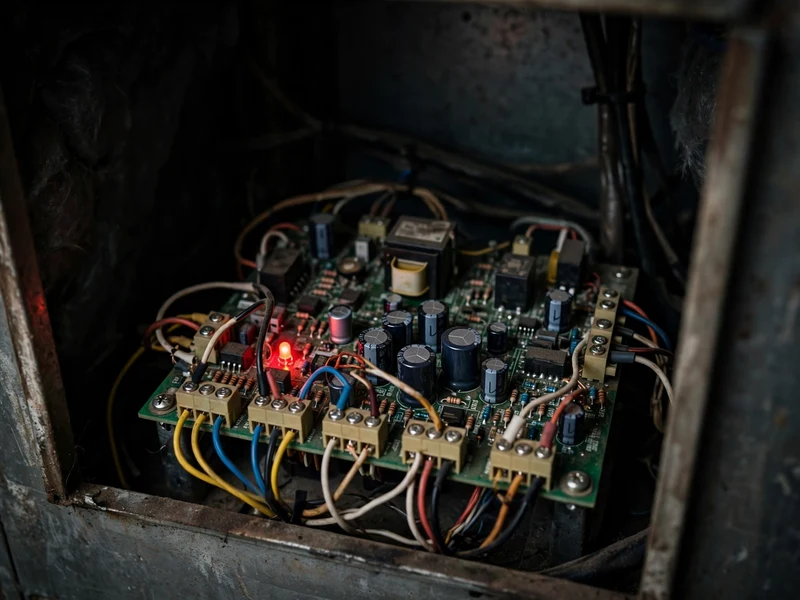
The red light lives on the furnace control board, and you view it through a small round sight glass set into the blower compartment door. That glass exists so you can see the diagnostic LED without opening the cabinet. On some older furnaces there is no sight glass, and you will need to remove the blower door to see the board directly.
The code chart is a sticker inside the blower door or on the cabinet wall near the board, listing what each blink pattern means for your model. This sticker is the authority: codes differ between brands, so an internet chart is a guess and your sticker is the answer. Note that removing the blower door trips a safety switch that cuts power, so the LED goes dark while the door is off. Read the chart, reseat the door firmly, and power returns.
How to Read the Blink Code in 30 Seconds
Watch the sight glass for a full cycle. Count the blinks, note the pause, then watch it repeat: three blinks, a pause, three blinks again is code 3. The pause is part of the code, so do not count straight through it.
Before anything else, photograph or video the pattern with your phone. The board clears the stored code the moment you reset power, and a technician who can see exactly what the furnace reported can diagnose the problem far faster.
Two patterns confuse everyone. A steady red glow usually means normal operation, and a very rapid continuous flash is the normal heartbeat on many boards. What you are looking for is a counted pattern with pauses, or no light at all.
Where in the Start-Up Sequence Did It Stop?
Furnace blinking red light meaning: your furnace is reporting a fault code, and the code tells you which step in the start-up sequence failed. Walk the sequence in order and find the step where the furnace stopped — that step is what is actually broken, and it narrows the blink code to one cause.
- Thermostat calls for heat. If nothing happens at all and the red light is dark, the furnace has no power. Check the breaker, the furnace power switch, and that the blower door is fully seated — our furnace not turning on guide walks through the same checks.
- Inducer fan starts. The draft inducer pulls air through the flue before anything lights. If you hear the inducer run and the furnace stalls here, the pressure switch cannot prove the draft — this is 2 or 3 blinks.
- Pressure switch proves. The switch closes when the draft is proven. If it never closes, that is 3 blinks; if it is stuck closed, that is 2 blinks. The usual causes are a blocked vent, a cracked or loose pressure hose, or a failed inducer.
- Ignitor glows and the gas valve opens. If the furnace tries to light and fails, or lights and dies within seconds, that is 1 blink — ignition lockout — and the usual suspects are a worn ignitor or a dirty flame sensor.
- Flame proves. The flame sensor must sense the flame within seconds of lighting. Burners that light and die point at the sensor first; clean or replace it before you chase the gas valve.
- Blower starts and heat moves. If the furnace lights, runs for a while, and then shuts off, that is 4 blinks — the high limit switch opened because the furnace overheated. Check the filter, open the registers, and check the blower.
- Safety limits. A rollout switch opening — 5 blinks — means flame where it should not be. Do not reset this one. Call now. Ignition that fails again and again locks the board out — 6 or more blinks, a hard lockout.
Do not reset repeatedly. One reset is safe to try: turn the furnace power switch off, wait thirty seconds, and turn it on. If the same code comes back, the fault is still there, and repeated resets only stress the ignition parts and can turn a simple failure into a lockout. Video the blink pattern before you reset — the board forgets the code when the power cycles, and the video is the best diagnostic head start you can give a technician.
If you are not sure which step failed, call (380) 273-8167 and report the blink count and where the sequence stopped. Columbus Furnace Repair serves Columbus and the suburbs, and for a no-heat night, see our emergency furnace repair page. If this is the first time you have run the furnace this season, run the first-fire checklist first so the filter and thermostat checks are already done — and if the fix comes back with a high quote, get it in writing and itemised; our guide to furnace repair quotes explains the red flags. For the full list, see the top 10 furnace problems in Columbus.
What the Most Common Blink Codes Mean
Your chart has the final word, but here are the patterns that show up most often across major brands and what they generally point to.
A 1 blink code usually means ignition lockout: the flame failed to establish or the board could not sense it. Suspects include a worn hot surface ignitor, a dirty flame sensor, or a gas supply issue. Our guides on furnace ignitor replacement cost, flame sensor cleaning, and furnaces that click but will not start walk through this exact failure.
Two and 3 blink codes are pressure switch territory. Two blinks often means the switch is stuck closed when it should be open, and 3 blinks usually means it never closed during startup, often from a blocked vent, a failed inducer, or a cracked hose. Our pressure switch guide covers the full diagnosis.
A 4 blink code typically means the high limit switch opened: the furnace overheated. The most common cause is restricted airflow, usually a severely clogged filter, closed registers, or a failing blower. See our limit switch guide for the complete checklist.
A 5 blink code on many boards is the rollout switch: flame or excessive heat where it should not be. Treat this one differently. Do not reset it repeatedly and do not bypass it. This code earns a service call.
Six or more blinks generally means the ignition sequence retried and failed several times, and the board has entered a hard lockout. One reset is reasonable. If it locks out again, the underlying part needs replacement, not more resets.

Call (380) 273-8167: We Diagnose It the Same Day
Is a Blinking Red Light an Emergency
Most of the time, a blink code is a same week problem, not a middle of the night one. But a few situations move it to the front of the line. Call for service right away if you smell gas near the furnace, if the code is a rollout code, if you smell burning from the electrical compartment, if water is leaking onto the controls, or if you have no heat and temperatures are dropping toward freezing.
It can usually wait for business hours if the furnace is still heating despite the code, if the code cleared after one reset and has not returned, or if the weather is mild and the house is comfortable. A code that returns after a reset is telling you the fault is real and persistent. If the furnace is blowing cold air while it blinks, our cold air causes guide ranks the likely culprits.
How to Safely Reset Your Furnace After a Lockout
Here is the one reset rule: turn the furnace power switch off, wait a full 30 seconds, and turn it back on. The switch is usually on the wall or the furnace itself, often with a red cover plate. Flipping the furnace breaker accomplishes the same thing. One reset. Not three, not five.
There is a reason for the limit. A soft lockout clears with a power cycle and may never return. A hard lockout returns because the fault is still present, and repeated resets can mask a dangerous condition while stressing components. If the same code comes back after one reset, the furnace is asking for a repair, not another reset.
Before you reset, run the 60 second sanity check: thermostat set to heat and set above room temperature, filter not completely packed with dust, and supply registers open around the house. These three account for a surprising share of first freeze lockouts. Never bypass a limit switch or rollout switch to get heat back. Those switches exist to prevent fires and carbon monoxide events, and defeating one trades a cold night for a genuinely dangerous one.

No Light at All? Start Here
A dark LED is its own diagnostic message: the control board has no power. Work through the power path before assuming the board is dead. Is the furnace power switch on? Did someone flip it off over the summer? Is the breaker tripped in the electrical panel? Our breaker tripping guide explains what a tripped furnace breaker is telling you.
Next, check the blower door. If it is even slightly ajar, the door safety switch stays open and the board gets no power, so push it firmly until it seats. If power is confirmed and the door is seated but the LED stays dark, the usual culprits are a blown low voltage fuse on the board or a failed transformer. Both are inexpensive parts, but this is where most homeowners hand it to a technician.
Common Blink Code Patterns at a Glance
| Pattern | What it usually means | Your next step |
|---|---|---|
| Steady glow, no blinking | Normal operation on most boards | None, confirm on your chart |
| Rapid continuous flash | Normal heartbeat on many boards | None |
| 1 blink | Ignition failure or flame not sensed | Check filter, reset once, then call |
| 2 blinks | Pressure switch stuck closed | Call for service |
| 3 blinks | Pressure switch failed to close | Check vents and filter, reset once, then call |
| 4 blinks | High limit switch open, overheating | Check filter and vents, reset once, then call |
| 5 blinks | Rollout switch open, flame where it should not be | Do not reset, call now |
| 6 or more blinks | Ignition retries exhausted, hard lockout | Reset once, then call |
| No light | No power to the control board | Check switch, breaker, and blower door, then call |
Important Considerations Before You Touch Anything
First, your code chart outranks everything you read online, including this article. Blink meanings shift between brands and model years, so confirm the pattern against your sticker before acting on it. Second, document the code with your phone before you reset, because the board forgets it the moment power cycles and your video is the best diagnostic head start a technician can get.
Third, never bypass a safety switch. Jumping out a limit or rollout switch to restore heat is one of the most dangerous things a homeowner can do with a furnace. Fourth, respect the one reset rule: a code that survives a power cycle is a real fault, and repeated resets only delay the repair.
Fifth, if your furnace is still under manufacturer warranty, leave internal part replacement to a professional, since DIY board or sensor swaps can void coverage. Diagnosis and a safe reset are fine. And finally, most lockout codes are preventable. A dirty flame sensor, a dying ignitor, and a clogged filter cause the large majority of fall lockouts, and all three are caught by an annual furnace tune up in Columbus OH before the first freeze arrives.
Frequently Asked Questions
Is a blinking red light on my furnace dangerous?
The blinking light itself is not dangerous; it is a diagnostic signal. Most codes indicate a failed start or an overheating safeguard. The exceptions are rollout codes and any code accompanied by a gas smell or burning odor, which deserve an immediate service call.
How do I read the blink code on my furnace?
Watch the LED through the sight glass for a full cycle. Count the blinks, note the pause, and watch the pattern repeat. Three blinks, a pause, and three blinks again is code 3. Then match that number to the code chart sticker inside your blower door. Record a short video of the pattern before you reset anything.
What does 3 blinks mean on a furnace?
On most brands, 3 blinks means the pressure switch failed to close during startup, so the furnace refused to ignite. Common causes are a blocked exhaust vent, a failed draft inducer, or a cracked pressure hose. Check that the outside vent is clear and the filter is clean, reset once, and call for service if the code returns.
Why is my furnace blinking red but still heating?
Some codes are stored from an earlier failed cycle even though the furnace eventually started, and some boards blink during specific stages of normal operation. If the house is warm and comfortable, note the code, and if it persists or returns after a reset, have it checked. A furnace that heats normally with a persistent code still has a fault worth diagnosing.
What is the difference between a steady red light and a blinking one?
A steady red glow usually indicates normal operation, and a rapid continuous flash is the normal heartbeat signal on many control boards. A counted blink pattern with pauses is a stored fault code. No light at all means the board has no power. Your code chart confirms which pattern means what on your model.
How do I reset my furnace after a lockout code?
Turn the furnace power switch off, wait 30 seconds, and turn it back on, or flip the furnace breaker off and on. Do this exactly once. If the same code returns, the furnace needs a repair, not another reset. Never bypass safety switches to clear a code.
My furnace has no light at all. Is the control board dead?
Not necessarily. No LED usually means no power reaching the board: check the furnace power switch, the breaker, and that the blower door is fully seated. If all check out, the likely causes are a blown low voltage fuse on the board or a failed transformer, both jobs for a technician.
Should I call a technician for a blinking red light?
Call if the code returns after one reset, if it is a rollout code, or if you smell gas or burning, or if you have no heat in freezing weather. A code that cleared and stayed clear in mild weather can wait for a scheduled visit, ideally folded into a fall tune up.
Call (380) 273-8167: Same Day Furnace Repair in Columbus OH
For more furnace help, browse the Columbus Furnace Repair blog.
2 Responses