
Furnace Flame Sensor Cleaning & Replacement
- Home
- Furnace Flame Sensor Cleaning & Replacement
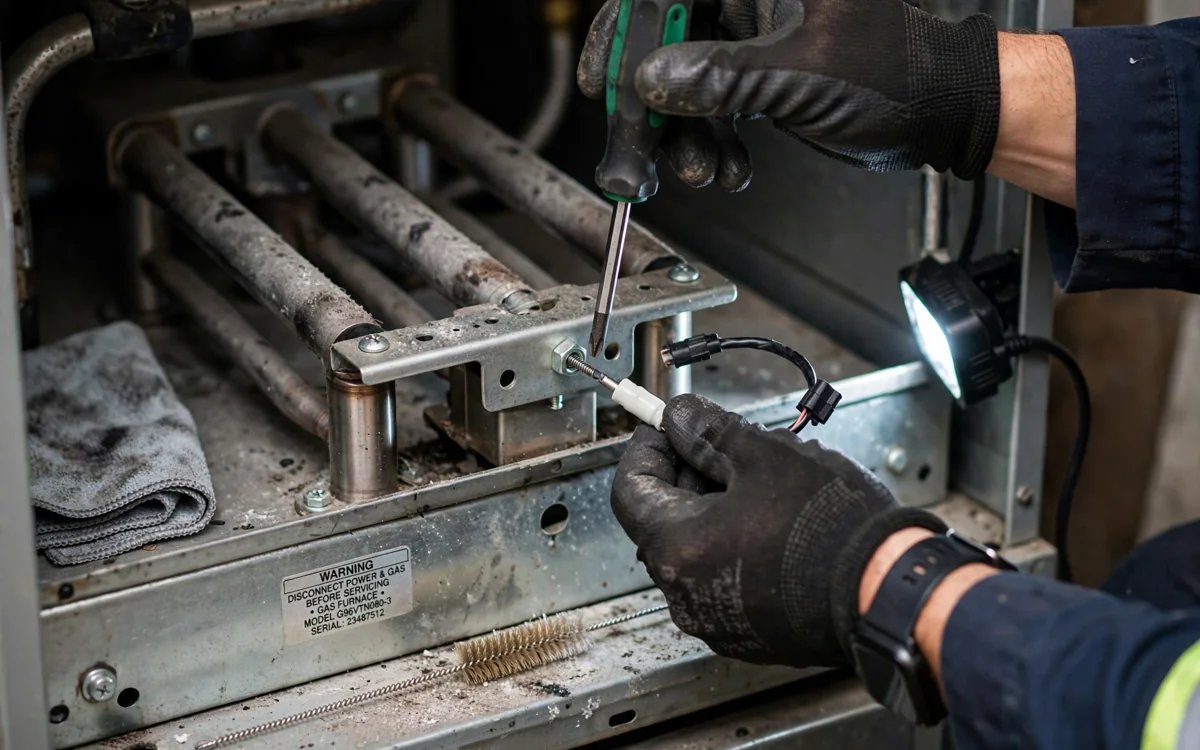
What does a furnace flame sensor do?
A flame sensor is a thin metal rod that confirms your furnace’s burner actually lit. When it gets coated in oxidation, the furnace starts, runs a few seconds, then shuts off. Cleaning the sensor with fine sandpaper usually fixes it; if the rod is pitted or cracked, it needs replacement. Columbus Furnace Repair handles both, call our 24/7 emergency line.
Why does my furnace start then shut off after a few seconds?
This is the signature symptom of a dirty flame sensor, and it’s the single most common pattern homeowners describe on this page’s topic:
- Thermostat calls for heat.
- You hear the inducer motor start, then the ignitor glow and the burners light.
- Warm air may just start moving, then everything shuts down after 3 to 10 seconds.
- The furnace retries once or twice, then gives up and locks out.
If that matches your furnace exactly, the flame sensor is suspect #1. The sensor’s oxidation layer is blocking the flame signal, so the control board kills the gas as a safety measure.
Other causes can mimic this, a failing ignitor that lights weakly, low gas pressure, or a cracked sensor insulator, which is why cleaning is the first move, not the guaranteed cure. If your furnace instead runs for several minutes and then shuts off, that’s usually an overheating/limit-switch problem (different fix, see Furnace Keeps Shutting Off).
[MID-PAGE CONVERSION BOX: “Furnace lighting then shutting off right now? A technician can clean or replace the sensor today. Call our 24/7 emergency line.”]
How do you clean a furnace flame sensor?
Cleaning a flame sensor is one of the more approachable furnace DIY jobs, it’s a 15 to 30 minute task with basic tools. Work carefully and stop at any step that doesn’t look like what’s described.
Before you start: Turn the furnace power switch OFF (it looks like a household light switch, usually on or beside the unit) and switch the breaker off too. Let the furnace cool completely. Gather: a piece of fine-grit sandpaper or emery cloth (a crisp dollar bill works in a pinch, it’s mildly abrasive), a 1/4-inch nut driver or screwdriver, and your phone flashlight.
- Open the burner compartment. Remove the furnace’s front access panel (usually lifts off or has quarter-turn fasteners).
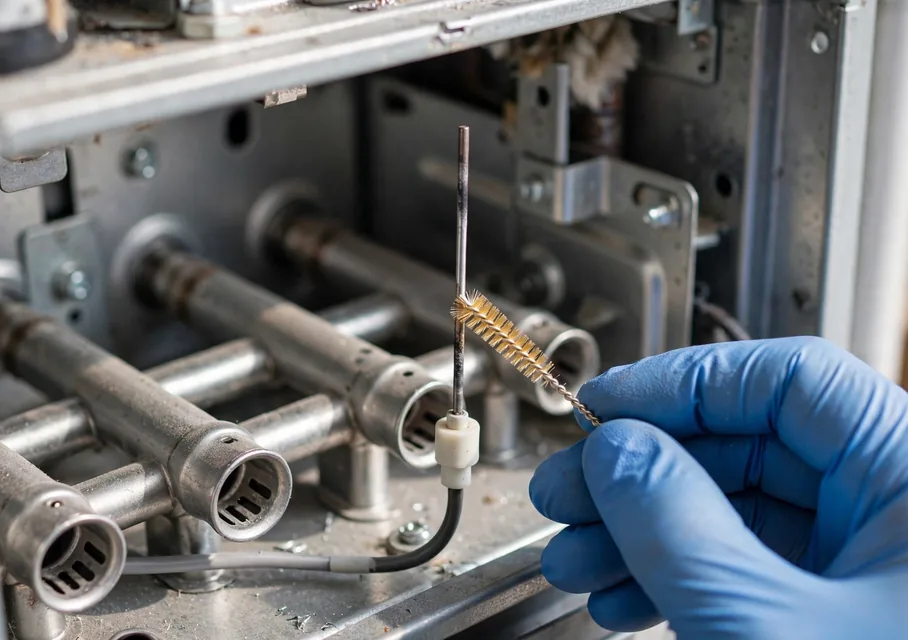
- Find the flame sensor. It’s a thin metal rod, about 3 to 4 inches long, mounted in front of the burner assembly, typically held by a single screw, with one wire connected to it. Don’t confuse it with the hot surface ignitor (a flat, fragile glowing element nearby), never touch the ignitor with your fingers.
- Remove the sensor. Disconnect the single wire, remove the one mounting screw, and slide the rod out. Note its orientation.
- Clean the rod. Rub the metal rod gently with the sandpaper/emery cloth along its length until the dull grey oxidation gives way to brighter metal. You’re removing a coating, not reshaping the rod, light pressure only. Wipe it clean with a dry cloth. Do not use steel wool (it leaves residue that burns onto the sensor).
- Reinstall. Slide the rod back in exactly as it sat, replace the screw, reconnect the wire.
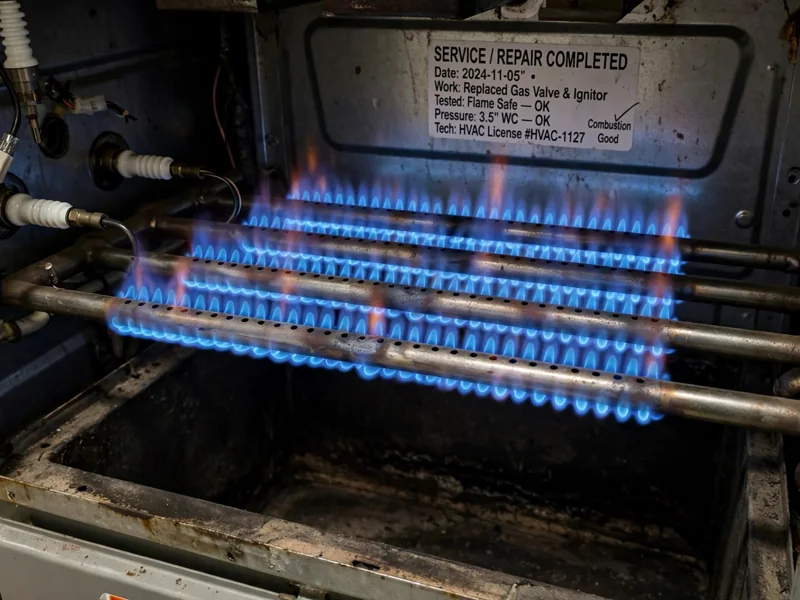
- Restore power and test. Panel on, breaker on, switch on, thermostat up. Watch a full cycle: burners should light and stay lit, with heat continuing until the thermostat is satisfied.
If the furnace now runs normally, you found it, this is worth doing as part of annual maintenance too. Still not working? Walk the full troubleshooting hub.
Safety limits: If you smell gas at any point, stop and leave it alone. If the burner area shows rust flakes, cracked ceramic on the sensor, or corrosion you can’t clean, that’s replacement territory, not cleaning. And if you’re not fully comfortable opening the furnace, there’s no shame in the call, this is a quick, inexpensive professional fix.
When should a flame sensor be replaced instead of cleaned?
Cleaning works when the rod is intact and only the surface is oxidized. Replace the sensor instead when:
- The rod is pitted, corroded, or physically cracked, cleaning can’t restore a damaged surface, and the problem will come back within weeks.
- The white ceramic insulator at the base is cracked, that can ground out the flame signal entirely.
- Cleaning only buys a few weeks. If you’ve cleaned it twice in one season and the shut-off symptom keeps returning, the sensor is at end of life.
- The furnace is older and the sensor has never been replaced. Flame sensors are wear parts; on a 12 to 15-year-old furnace, a fresh sensor is cheap insurance against a no-heat night in a Columbus January (mean temperature 29.6°F, overnight lows around 22°F).
The part itself is inexpensive, the cost of the job is mostly the technician’s visit. Replacement is quick, usually done in the same visit as the diagnosis.
[CONVERSION BOX: “Cleaned it and it still shuts off after a few seconds? The sensor, or something upstream, needs a professional look. Columbus Furnace Repair: our 24/7 emergency line.”]
- The rod is pitted, corroded, or physically cracked, cleaning can't restore a damaged surface, and the problem will come back within weeks.
- The white ceramic insulator at the base is cracked, that can ground out the flame signal entirely.
- Cleaning only buys a few weeks. If you've cleaned it twice in one season and the shut-off symptom keeps returning, the sensor is at end of life.
- The furnace is older and the sensor has never been replaced. Flame sensors are wear parts; on a 12 to 15-year-old furnace, a fresh sensor is cheap insurance against a no-heat night in a Columbus January (mean temperature 29.6°F, overnight lows around 22°F).
- Follow-Up Support, Post-repair testing and honest advice to keep your furnace heating efficiently.
How much does flame sensor cleaning or replacement cost?
Flame sensor work sits at the affordable end of furnace repair:
- Professional cleaning is typically bundled into the diagnostic visit, a Columbus service/diagnostic call generally runs $75 to $150 (published HVAC cost data).
- Flame sensor replacement, parts and labor, typically lands around $80 to $250 total depending on the furnace model.
- For context, the average furnace repair in Columbus is $304, with most repairs between $123 and $505 (Angi), flame sensor jobs are usually at or below that average.
You’ll get the exact price before work begins. Full Columbus furnace repair cost guide, part by part. If the diagnosis turns out to be something bigger, an ignitor, a control board, you approve that quote before anything is replaced. And if your furnace won’t stay lit at all tonight and the house is getting cold, treat it as an emergency: 24/7 emergency furnace repair in Columbus.
Can I still call if cleaning didn't fix it?
Absolutely, and honestly, that’s exactly who this page is for. Plenty of Columbus homeowners find this guide, clean the sensor exactly right, and the furnace still shuts off. That doesn’t mean you did it wrong. It usually means the real problem is one of the mimics:
- A weak or cracked ignitor that lights the gas inconsistently Furnace Ignitor Replacement
- A failing control board that can’t read the flame signal even from a clean sensor
- Gas pressure or valve issues that starve the burners
- Carbon buildup inside the burner restricting the flame the sensor needs to “see”
When you call our 24/7 emergency line, tell the technician what you already did, “cleaned the flame sensor, still shuts off in five seconds” is genuinely useful information that speeds up the diagnosis. Same-day service is available across Columbus and the suburbs, and no-heat calls in freezing weather get priority dispatch. Columbus Furnace Repair, all furnace services.
Cleaned the sensor and it still won’t stay lit? That’s a diagnosis job, not a bigger DIY project. Columbus Furnace Repair will find the real cause, sensor, ignitor, or board, and quote the fix before any work starts.
[BIG CALL BUTTON: 📞 our 24/7 emergency line] Same-day service across Columbus & suburbs · Upfront pricing · All major brands
Frequently Asked Questions
How do I tell if my furnace flame sensor is dirty?
The classic sign: the furnace lights, runs for just a few seconds, then shuts off, and repeats that cycle. Visually, a removed sensor will show a dull grey or white-ish oxidized coating on the metal rod instead of bright metal. If cleaning the rod restores normal operation, dirt was the problem.
Should I clean the flame sensor myself?
If you’re comfortable turning off the power, opening the burner panel, and handling one screw and one wire, yes, it’s a reasonable DIY. Use fine sandpaper or emery cloth, never touch the ignitor, and stop immediately if you smell gas or see cracked ceramic or heavy corrosion. If any of that gives you pause, a professional cleaning is inexpensive, call our 24/7 emergency line.
How do you clean the flame sensor on a Goodman furnace?
The same way as on any modern gas furnace: power off, open the burner compartment, find the single-screw metal rod in front of the burners, remove it, polish the rod with fine emery cloth until the metal brightens, and reinstall. Goodman’s sensor placement is typical, one wire, one screw. The step-by-step above walks the full sequence.
What's the difference between a bad ignitor and a bad flame sensor?
An ignitor creates the flame; a flame sensor verifies it. Bad ignitor: the furnace clicks and tries, but the burners never light at all (or you see the ignitor glow weakly without ignition). Bad flame sensor: the burners light fine, then shut off within seconds because the board thinks there’s no flame. Both are common, relatively inexpensive fixes.
Why does my furnace keep shutting off?
Seconds-long run times point at the flame sensor or ignition; run times of several minutes point more at overheating, a clogged filter, blocked vents, or a failing blower tripping the high-limit switch. The timing of the shutdown is the biggest clue. Furnace Keeps Shutting Off
Furnace Help in Columbus, 24/7
No heat in Columbus? Lines are answered around the clock for same-day and emergency furnace repair.
Call Anytime
Lines answered 24/7 for Columbus furnace emergencies.
Same-Day Service
Most Columbus calls are seen the same day you call.
Service Area
Columbus, OH, plus 14 nearby suburbs.
Working Hours
- Mon to Sun : Open 24 Hours
- Emergency : 24/7
- Holidays : Open