
Furnace Leaking Water: Causes, Fixes & When to Call
- Home
- Furnace Leaking Water: Causes, Fixes & When to Call
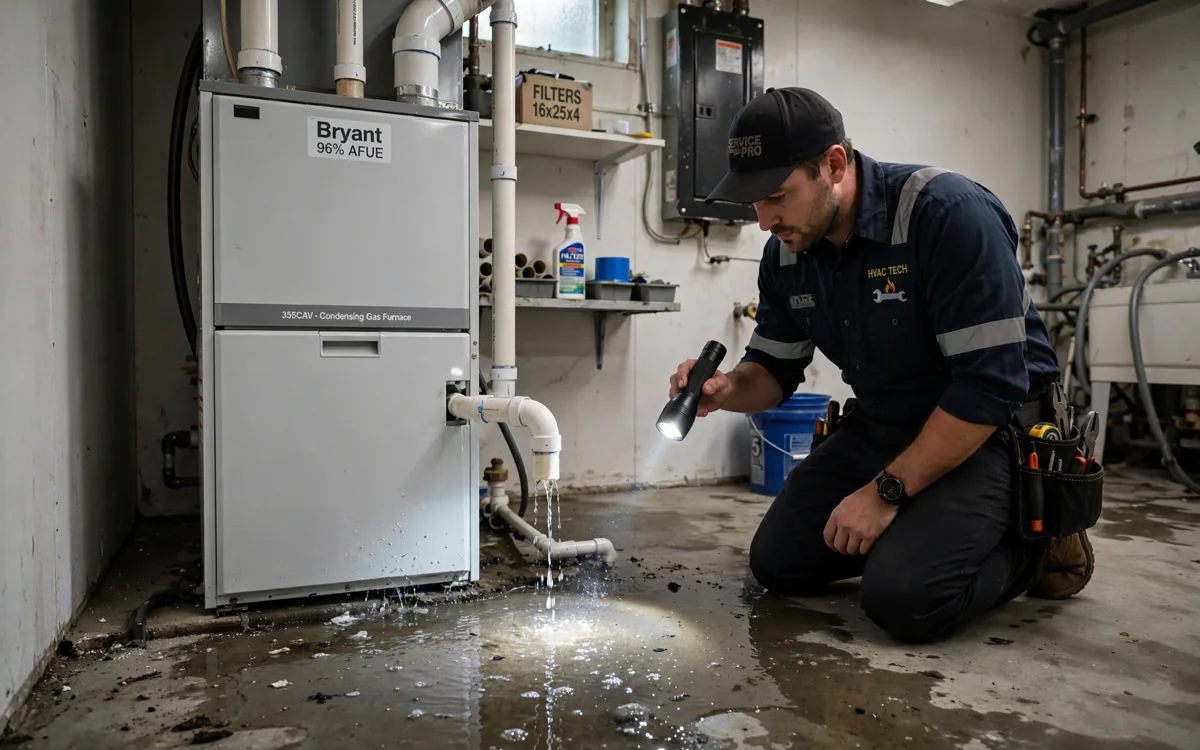
Why is water pooling under my furnace?
Water under a high-efficiency furnace usually comes from its condensate system, combustion produces water that must drain away, and a clogged condensate drain line or trap is the #1 cause of leaks. Less often, a cracked heat exchanger is behind it, which is a safety issue. Columbus Furnace Repair diagnoses furnace leaks same-day, call our 24/7 emergency line.
Is a leaking furnace dangerous?
Usually not, but it deserves prompt attention for three reasons:
- Water damage compounds fast. A slow condensate overflow soaks furnace-room flooring, drywall, and stored belongings, and feeds mold growth. A small drain clog becomes a flooring bill.
- Electrical and corrosion risk. Water reaching the control board, blower motor, or wiring corrodes components and can short out electronics, turning a cheap drain repair into a board replacement.
- The rare dangerous case is real. If the water is tied to a cracked heat exchanger, combustion gases, including carbon monoxide, can mix into your home’s air. This is uncommon, but it’s exactly why a leak you can’t trace to the drain system should be diagnosed professionally rather than mopped up and ignored for a season.
Bottom line: a leak you can see coming from the drain line is a maintenance issue. A leak with no obvious source, corrosion, or any CO concern is a same-day call. 24/7 emergency furnace repair in Columbus.
What is furnace condensate and where does it drain?
Burning natural gas produces two main byproducts: carbon dioxide and water vapor. A standard furnace sends that vapor out the flue, still hot. A high-efficiency condensing furnace squeezes out the remaining heat in a secondary heat exchanger, cooling the exhaust so much that the water vapor condenses into liquid inside the furnace. That liquid is condensate, and it’s mildly acidic, which is why it travels through plastic (PVC) plumbing rather than metal.
The drain path is simple: condensate collects in a trap (which also blocks exhaust gases from backing up the drain), flows through a small drain line, and ends at a floor drain, utility sink, or condensate pump that lifts it to a drain. Every joint in that path is a potential leak point, and the trap’s standing water is a natural home for algae and sludge, which is why a quick trap-and-line cleaning during annual service prevents most leaks before they start. What a furnace tune-up actually includes.
Note for AC season: in summer, the leak under the same cabinet is usually the air conditioner’s coil condensate backing up, same drain, different appliance. This page’s guidance applies year-round.
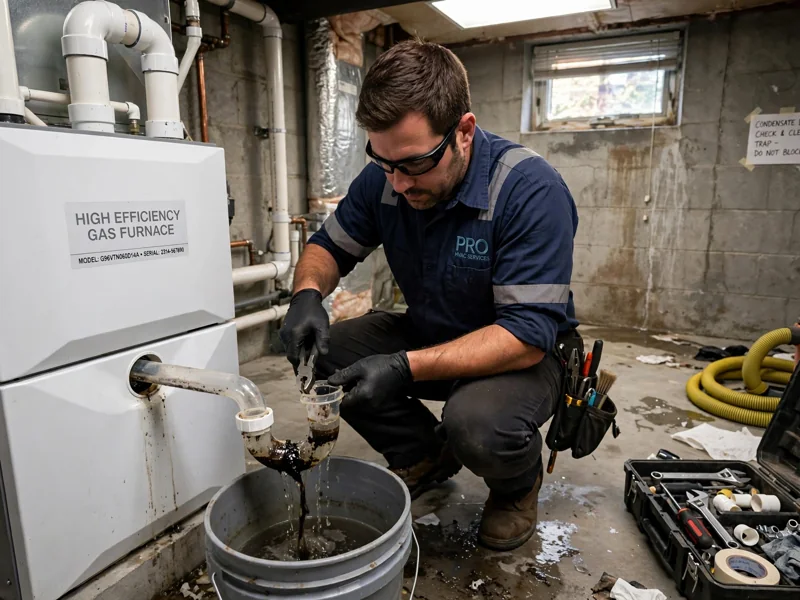
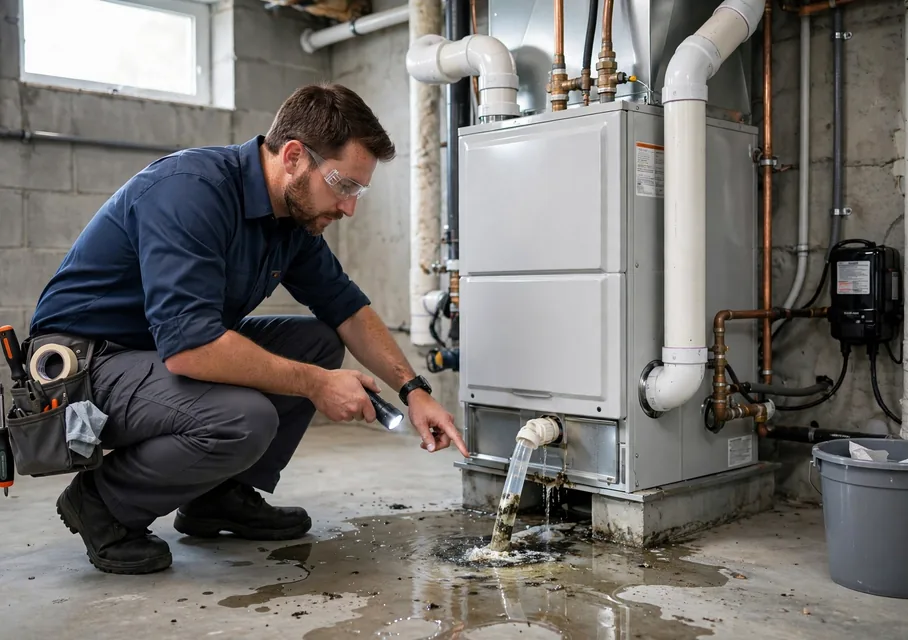
Can I run my furnace while it's leaking water?
Short-term, usually yes, long-term, don’t. If the leak is a condensate drain overflow, the furnace will keep heating, and in a Columbus cold snap (January mean 29.6°F) heat is not optional. But three cautions:
- Watch the water level. If the pool is growing, shut the furnace off at its power switch and mop up, water and furnace electronics don’t mix.
- Don’t ignore the shutoff protection. Many systems have a safety switch that kills the furnace if condensate backs up into it. If your furnace stops working entirely and there’s water around it, that switch may have done its job, that’s a repair call, not a reset. Furnace Not Turning On
- Set a deadline. “Running it while it leaks” is a bridge of a day or two until the repair, not a winter strategy. Corrosion starts immediately, and the backup that caused the overflow will only worsen.
If you’re unsure whether the water is from the drain system at all, err toward the call, finding out is exactly what a diagnostic visit is for.
- Watch the water level. If the pool is growing, shut the furnace off at its power switch and mop up, water and furnace electronics don't mix.
- Don't ignore the shutoff protection. Many systems have a safety switch that kills the furnace if condensate backs up into it. If your furnace stops working entirely and there's water around it, that switch may have done its job, that's a repair call, not a reset. Furnace Not Turning On
- Set a deadline. "Running it while it leaks" is a bridge of a day or two until the repair, not a winter strategy. Corrosion starts immediately, and the backup that caused the overflow will only worsen.
- Preventive Care, A seasonal tune-up keeps small wear items from becoming mid-winter breakdowns.
- Follow-Up Support, Post-repair testing and honest advice to keep your furnace heating efficiently.
How much does it cost to fix a furnace leaking water?
Leak repairs sit at the affordable end of furnace work, because the most common causes are plumbing-simple:
| Repair | Typical cost |
|---|---|
| Diagnostic / service visit | $75 to $150 |
| Condensate drain line & trap cleaning | $100 to $250 |
| Condensate pump replacement | $150 to $350 |
| Drain tubing repair/replacement | $100 to $300 |
| Humidifier leak repair | $150 to $400 |
(Per-part ranges per published HVAC cost data.)
For context, the average furnace repair in Columbus is $304, with most repairs between $123 and $505 (Angi), most leak fixes land at or below that average. The exception is the cracked heat exchanger: exchangers typically aren’t repaired, they’re the trigger for furnace replacement ($2,000 to $5,400 installed, HomeGuide), which is why tracing a leak’s true source matters before authorizing work. Full Columbus furnace repair cost guide.
When is a furnace leak a sign to replace the furnace?
A drain clog never justifies a new furnace, but a leak can be the first visible symptom of end-of-life problems. Replacement enters the conversation when:
- The heat exchanger is cracked. This is the non-negotiable one: safety risk, and replacement of the furnace (not the exchanger alone) is the standard remedy. Furnace repair vs. replacement, the full math.
- Corrosion has spread. If a long-ignored leak has rusted the cabinet, burner assembly, or control board, you’re suddenly stacking multiple repairs on an aging unit.
- The furnace is 15 to 20+ years old and repairs are stacking. The 50% rule applies: when the repair quote passes half the cost of a new system on an older furnace, replacement usually wins on both reliability and gas bills (80% AFUE → 95%+ AFUE).
- Water damage keeps recurring despite drain repairs, pointing to a deeper installation or venting problem that a new install corrects properly.
A single clogged trap on a 7-year-old furnace? Clean it and carry on. Columbus Furnace Repair will tell you which situation you’re actually in, our 24/7 emergency line.
Water spreading under your furnace right now? Every day a condensate leak runs, it’s corroding the components it touches. Columbus Furnace Repair will trace the source, drain, pump, or something serious, and quote the fix before work begins.
[BIG CALL BUTTON: 📞 our 24/7 emergency line] Same-day service across Columbus & suburbs · Upfront pricing · All major brands
Frequently Asked Questions
Why is water leaking from the bottom of my furnace?
On a high-efficiency (condensing) furnace, it’s almost always the condensate system: a clogged drain line or trap, cracked drain tubing, or a failed condensate pump backing water up until it overflows. On a standard 80% furnace, which doesn’t produce condensate, look at the whole-house humidifier or the AC coil drain above the furnace.
Is a furnace leaking water an emergency?
A slow condensate drip is a same-day or next-day repair, not a midnight emergency, but don’t let it run for weeks. It becomes urgent if the water is spreading toward electrical components, the furnace has shut down from its backup safety switch, or there’s any sign of a cracked heat exchanger (corrosion, soot, CO concerns). When in doubt, call our 24/7 emergency line.
Is it normal for a furnace to drain water?
For a high-efficiency condensing furnace, yes, producing and draining water is how it achieves 90%+ AFUE, and several gallons a day in cold weather is normal. What’s not normal is water on the floor: draining is normal, pooling isn’t. Standard-efficiency (80% AFUE) furnaces produce no water at all, so any water under one needs a source hunt.
Can a leaking furnace cause carbon monoxide poisoning?
A drain leak itself can’t. But one rare cause of furnace water, a cracked heat exchanger, absolutely is a CO risk, because cracks can let combustion gases into your household air. If a leak comes with heavy corrosion, soot, a metallic smell, or a CO alarm, treat it as urgent: out of the house for alarms, 911 first, then our 24/7 emergency line for the furnace.
How much does it cost to fix a furnace leaking water?
Most leak fixes are condensate drain work, cleaning a clogged line and trap typically runs $100 to $250, and a replacement condensate pump $150 to $350 (published HVAC cost data). The expensive exception is a cracked heat exchanger, which means furnace replacement at $2,000 to $5,400 (HomeGuide). A diagnostic visit ($75 to $150) confirms which one you have before you commit to anything.
Furnace Help in Columbus, 24/7
No heat in Columbus? Lines are answered around the clock for same-day and emergency furnace repair.
Call Anytime
Lines answered 24/7 for Columbus furnace emergencies.
Same-Day Service
Most Columbus calls are seen the same day you call.
Service Area
Columbus, OH, plus 14 nearby suburbs.
Working Hours
- Mon to Sun : Open 24 Hours
- Emergency : 24/7
- Holidays : Open