
If your furnace fails during a Columbus cold snap, pipes can freeze and burst within hours — so check the thermostat, the furnace breaker and the furnace power switch first, then call for 24/7 help at (380) 273-8167 if the heat does not return. This guide to furnace failure, frozen pipes, Columbus OH explains what to do first, and how to keep your pipes safe.
Table of Contents
What happens when the furnace fails in a cold snap?
When the furnace stops in a cold snap, the house cools steadily, room by room. Pipes in rooms over a garage, above a crawl space, or on an exterior wall — and pipes in unheated spaces such as a basement or garage — are the first to freeze. Once water inside a pipe freezes, it expands, and the pressure can split the pipe, often at a joint or elbow. That is why furnace failure in freezing weather is two emergencies at once — no heat, and water damage waiting to happen. The longer the heat stays off, the colder the house gets and the more pipes are at risk.
If you woke up to a cold house, start with our guide to what to do first if you have no heat at night in Columbus, OH, then work through the checks below. If your furnace stopped right after the power went out, see our guide on what to do when your furnace won’t start after a power outage in Columbus, OH.
Why do pipes freeze when the heat stops?
Pipes freeze because still water in a cold pipe loses heat to the air around it. While the furnace runs, warm air keeps the pipes inside the walls and floors above freezing. When the heat stops, the temperature around those pipes falls toward the outdoor temperature — fastest where pipes run along exterior walls, in a crawl space, in a garage, or near a drafty window. Water expands as it freezes, ice can block the pipe, and pressure builds until the pipe splits — usually further along the line, not where the ice is.
That is why a furnace that keeps shutting off is worth fixing quickly, and why a furnace blowing cold air should not be left for another day when a cold snap is coming.
How cold does it have to get in Columbus?
It does not take a record low. In Columbus, January overnight lows are around 22°F, and our heating season runs from October to April, so freezing nights are a normal part of winter here — and the city gets about 27 inches of snow a year. Pipes are most at risk on a still night when the temperature stays below freezing for hours. A furnace that is not working on a night like that gives the cold a free run at your plumbing. Homes with pipes in a crawl space, an unheated garage or an exterior wall are at risk first, and a home that has already had a frozen pipe is likely to freeze again in the same spot.
If your area has also lost power, check with AEP Ohio, the electric utility for most of Columbus, or with Columbia Gas of Ohio if you have a gas furnace — a utility outage and a furnace fault can look the same from inside the house.
What should I do first when the furnace stops in freezing weather?
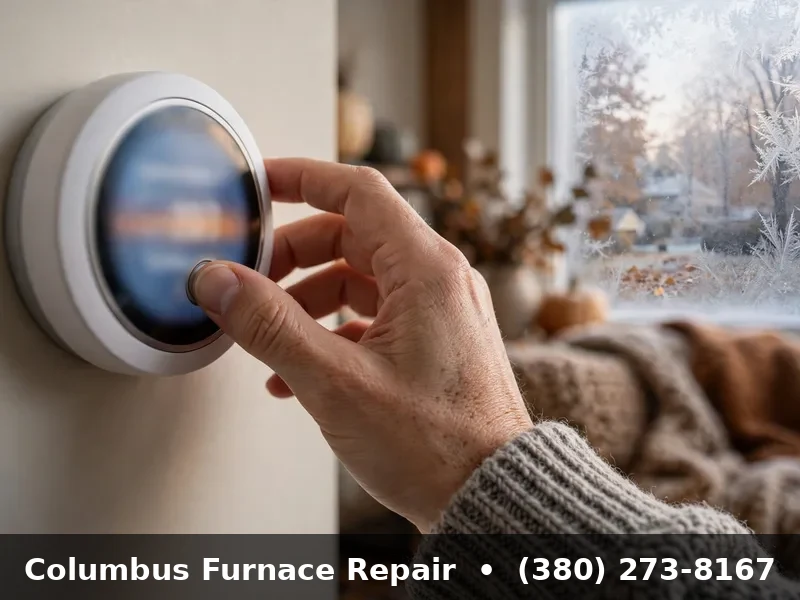
Work through the three quick checks first: the thermostat, the furnace breaker, and the furnace power switch. Set the thermostat to heat, a few degrees above the room temperature. Then check the breaker panel for a tripped furnace breaker and reset it once if it has tripped. Finally, check the furnace power switch — it looks like a light switch, usually on the wall near the furnace — and make sure it is on. If the furnace is not turning on at all after those three checks, look through the furnace sight glass: a blinking red light on your furnace is a fault code, and counting the blinks before you call helps the technician.
How do I keep pipes from freezing while waiting for repair?
Keep the house as warm as you can with what you have, and keep the water moving. Keep the thermostat at its normal setting — do not turn the heat off overnight. Let faucets on exterior walls drip, open cabinet doors, and keep the garage door closed if pipes run through the garage. A portable space heater can warm the room with the pipes at risk — keep it away from anything that can burn. Never use an oven or a gas stove to heat the house, and never run a portable generator indoors — generators produce carbon monoxide, and our guide to carbon monoxide safety for gas furnaces explains what to check. If your carbon monoxide alarm sounds, leave your home immediately and call 911 before calling us. For the full safe-heat method, see our guide to staying warm while waiting for furnace repair in Columbus.
Cold-snap tip: Find your main water shut-off valve now — before anything bursts. It is usually near where the water line enters the house, often in the basement. If a pipe does burst, shutting the water off in the first minute can save thousands of dollars in water damage.
The American Red Cross frozen-pipes guide has more on preventing and thawing frozen pipes, including how to thaw a pipe safely with a hair dryer — never with an open flame. If a pipe is frozen but has not burst, you can try warming it gently, but if you cannot find the frozen section, or the pipe is behind a wall, call a professional rather than forcing it.
What if a pipe has already burst?
Shut the water off at the main valve right away, then open the taps to drain what is left in the pipes. Do not touch water near electrical outlets or the furnace — if water has reached the furnace or the electrical panel, stay out of the water and call for help. A burst pipe is a plumbing emergency first, but your furnace may need checking too: water near a gas furnace is a safety issue, and a furnace that was not heating needs a technician before it runs again.
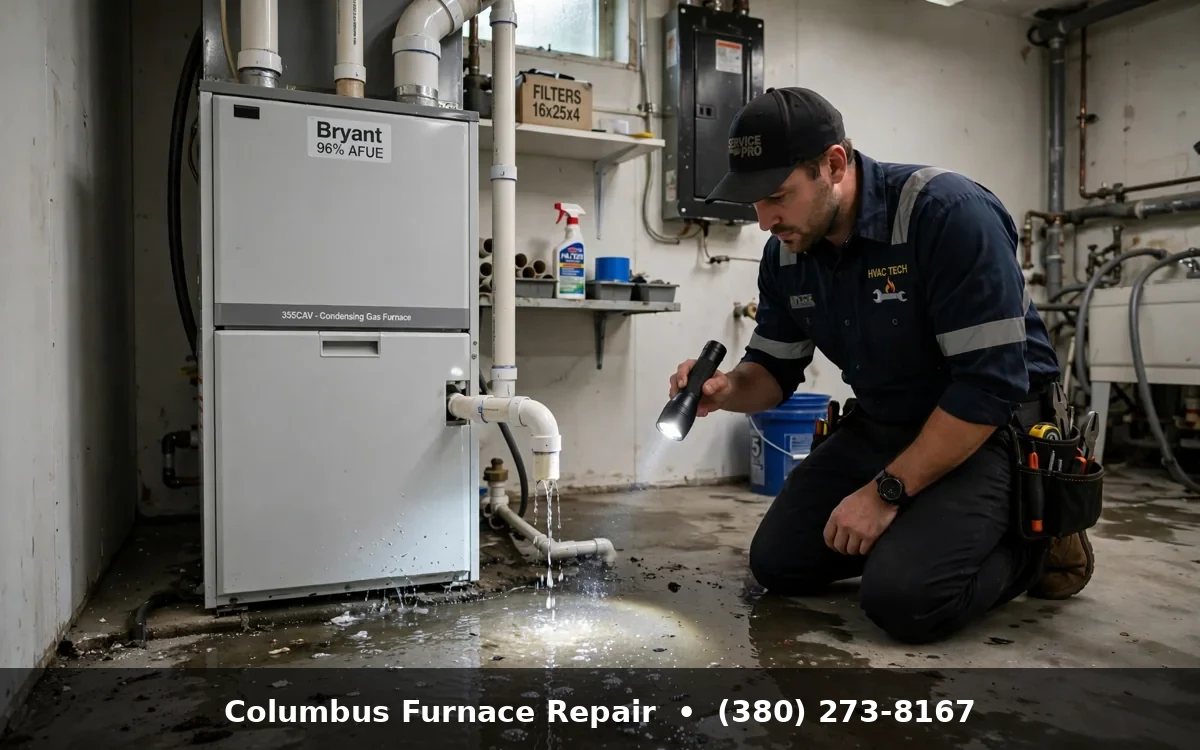
Once the water is off and the area is safe, call our 24/7 emergency furnace repair in Columbus, OH line at (380) 273-8167 if the furnace is involved or the heat is still off. A plumber fixes the pipe; we make sure the furnace is safe to run again and the house gets warm before the next freeze. Do not wait until morning — a house with no heat and a burst pipe will only get colder and wetter.
When should I call for emergency furnace help?
Call our 24/7 emergency line at (380) 273-8167 if the furnace will not start after the thermostat, breaker and switch checks, if it starts and stops again, or if you smell gas — in that case, leave the house first and call Columbia Gas of Ohio or 911 from outside. Call right away, too, if the house is cooling fast and you have pipes at risk. The average furnace repair in Columbus, OH is $304, according to Angi, and most jobs fall between $123 and $505. You can read more on our furnace repair cost in Columbus, OH page and our guide to what a furnace repair should cost. If the furnace is old, see our pages on furnace replacement in Columbus, OH and furnace installation in Columbus, OH, including advice on what size furnace do I need.
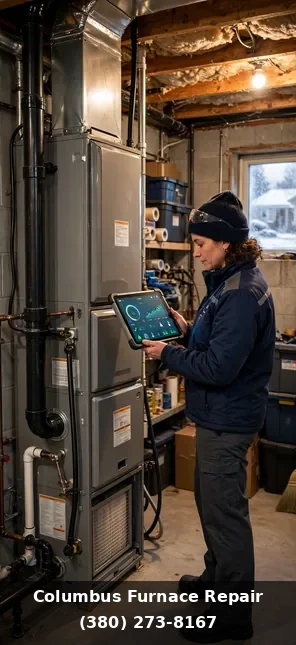
If the problem turns out to be a dirty flame sensor, our page on flame sensor cleaning and replacement explains what that fix involves — but a flame sensor that keeps fouling, or a furnace that keeps shutting off after a reset, needs a technician, not another reset.
How do I prevent the next cold-snap failure?
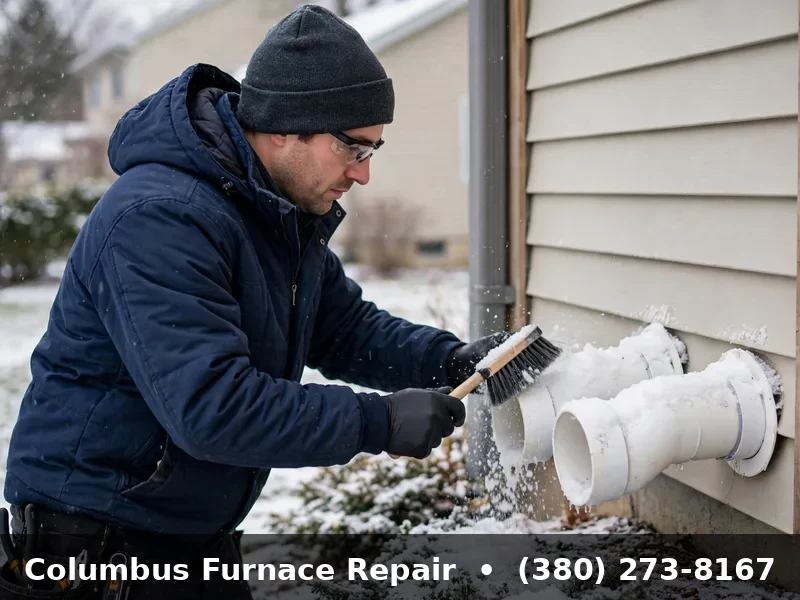
The best time to prevent the next failure is before the next cold snap, not during it. Book a furnace tune-up in Columbus, OH before the heating season — a tune-up catches a worn igniter, a dirty flame sensor and a clogged filter before they become a no-heat call in the middle of the night. Between visits, change the filter on schedule and check the furnace vent pipes outside after every snowfall. Keep snow and ice clear of the gas meter, too.
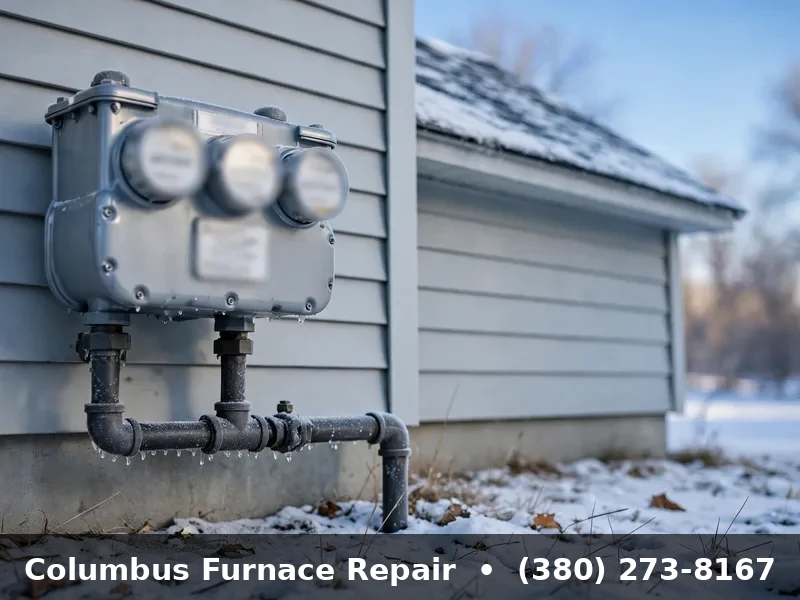
Inside, insulate pipes in unheated spaces and seal drafts where pipes run. The heating season here runs from October to April, so a furnace that struggles in November will not get better by January. A little preparation in the fall is the cheapest insurance against furnace failure and frozen pipes in Columbus, OH.
A furnace failure in a cold snap does not have to end in frozen pipes. Check the thermostat, breaker and switch, keep the water moving, and call (380) 273-8167 if the heat does not come back — our 24/7 team is ready across Columbus and 13 suburbs.
Frequently Asked Questions
How fast can pipes freeze when the furnace fails in Columbus?
It depends on the temperature outside, your insulation and where the pipes run — but on a night when January overnight lows are around 22°F, pipes in an unheated space can freeze within hours of the heat stopping.
Should I turn the water off if my furnace stops in freezing weather?
Not right away. While you wait for repair, let faucets drip and open cabinet doors under sinks — moving water is harder to freeze. Turn the water off only if a pipe has burst.
Will my furnace start again on its own when the power comes back?
Usually, yes — a healthy furnace restarts on its own once power, the breaker and the thermostat are back to normal. If it does not, check the breaker and the furnace power switch, then call (380) 273-8167.
How much does emergency furnace repair cost in Columbus, OH?
The average furnace repair in Columbus, OH is $304, according to Angi, and most jobs fall between $123 and $505. Repairs are diagnosed on site and the price is quoted before work begins.
2 Responses