
TLDR Quick Answers
- Short answer: A high gas bill can point to a furnace problem, but it can also come from colder weather, more billing days, rate changes, household use, or air leakage.
- Check usage first: Compare gas consumption, not only the dollar total.
- Furnace clues: Long run times, poor heat, short cycling, delayed ignition, weak airflow, or a sudden usage increase without a weather change deserve inspection.
- Filter and airflow: Restricted airflow can make the system operate poorly, but a filter is only one possible cause.
- Older furnace: Age and lower AFUE can raise fuel use, but replacement savings depend on the house, weather, fuel cost, and old system condition.
- Safety: A high bill does not diagnose a gas leak or cracked heat exchanger; gas smell and CO alarms require emergency action.
- Columbus weather: Cold snaps can raise legitimate heating usage even when the furnace is working normally.
A high gas bill does not automatically mean your furnace is failing. Columbia Gas of Ohio says weather, billing cycle length, household changes, usage, and appliance performance can all change the bill, so the first step is to separate higher gas consumption from higher cost per unit and from a real furnace performance problem.
Gas use jumped and the furnace is running differently? Call (380) 273-8167 for a furnace diagnosis, or start with the Columbus furnace repair hub.
What Should You Check First on a High Gas Bill?
Start with the bill itself. Compare the current period with a similar prior period and look for changes in gas usage, billing days, and charges rather than focusing only on the final dollar amount.
Columbia Gas of Ohio lists several common reasons a bill changes: weather and temperature, number of days in the billing cycle, past due balances, household changes, and appliance performance. It also explains that the Gas Supply Charge and usage based portions of distribution charges rise when you use more gas. Source: Columbia Gas of Ohio, Understanding Your Bill.

How Can You Tell Weather From a Furnace Problem?
A cold month can make a healthy furnace use more gas because the home loses heat faster and the system runs longer. A furnace problem becomes more likely when gas usage rises while outdoor temperatures, thermostat settings, household occupancy, and billing days are similar to the comparison period.
| What changed? | More likely explanation | What to do |
|---|---|---|
| Much colder weather | Normal heating load may be higher | Compare usage with weather and indoor comfort |
| More billing days | Larger bill can be normal | Normalize usage per day |
| Same weather, much higher usage | Furnace, thermostat, hot water, cooking, fireplace, or another gas load may have changed | Check appliance behavior |
| Furnace runs constantly and house stays cold | Heating performance or building heat loss issue | Schedule diagnosis |
| Furnace starts and stops every few minutes | Airflow, sensor, thermostat, sizing, or safety control problem | Diagnose short cycling |
| Weak airflow | Filter, blower, duct restriction, or control issue | Check filter, then inspect blower and airflow |
| Gas smell | Possible gas leak | Leave and call 911 or the gas utility from outside |
| CO alarm | Possible carbon monoxide exposure | Leave and call 911 from outside |
The first freeze furnace guide helps explain why usage and run time can jump quickly when Columbus moves into colder weather.
Does Furnace Age Increase Gas Use?
It can. AFUE measures how much of a furnace fuel becomes useful heat over a heating season. The U.S. Department of Energy compares 80 percent and 95 percent plus AFUE furnaces in northern climate purchasing guidance, showing that higher AFUE equipment uses less fuel for the same rated heat output under its assumptions. Source: U.S. Department of Energy, Residential Furnaces.
Real household savings are not equal to the label difference alone. Duct losses, air leakage, thermostat settings, weather, furnace sizing, maintenance, and actual fuel prices all affect the result.
If your furnace is around 15 years old, see our guide to repairing a 15 year old furnace in Columbus to compare age with the actual condition of the system.
Which Furnace Problems Can Increase Heating Usage?
Several problems can raise run time or reduce comfort:
- Restricted airflow from a heavily loaded filter
- Blower problems that reduce air movement
- Short cycling that prevents stable heating
- Thermostat problems or poor thermostat location
- Ignition or flame sensing problems that interrupt normal cycles
- Duct leakage or distribution problems
- Furnace sizing problems
- Building air leakage that makes the furnace work harder
- Poor maintenance or combustion performance
A single symptom does not identify the failed part. A furnace that runs all the time may be responding normally to extreme cold, or it may be unable to provide enough heat because of airflow, equipment, duct, or building envelope issues.
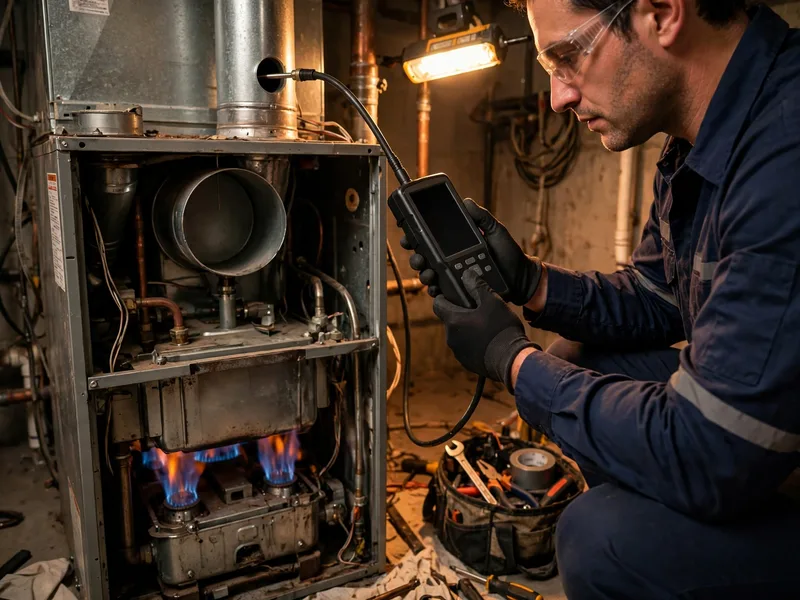
Can a Dirty Filter Cause a High Gas Bill?
A heavily restricted filter can reduce airflow and create overheating or cycling problems, which can hurt comfort and furnace operation. Replacing a dirty filter is a sensible first check, but it is not a guaranteed fix for a high bill.
If the filter is clean and the furnace still runs abnormally long, struggles to reach temperature, or repeatedly shuts off, the system needs diagnosis rather than another filter change.
Why Does a Columbus Cold Snap Change the Bill So Much?
Columbus winter heating demand is real, and the first freeze can arrive across a wide fall window. The National Weather Service says the first 32 degree fall temperature in Columbus has occurred as early as September 21 and as late as November 27. Source: NWS Fall Frost and Freeze Information.
Once outdoor temperatures stay lower, heat loss from walls, windows, doors, ceilings, and air leakage increases. The furnace runs more to replace that lost heat. A higher bill during that period can be normal even if nothing mechanical changed.
Not sure whether the bill is weather or the furnace? Compare daily gas usage and furnace behavior, then call (380) 273-8167 if the system is running longer, heating poorly, or cycling abnormally.
Should You Replace an Old Furnace Because the Gas Bill Is High?
Not without diagnosis. A higher efficiency furnace can use less fuel for the same heating output, but a replacement decision should also account for repair history, comfort, equipment condition, fuel prices, installation quality, house heat loss, and how long you plan to stay in the home.
If a company jumps from a high bill to a new furnace quote without identifying a current defect, read the furnace replacement second opinion guide before approving a major purchase. The furnace repair cost guide also shows likely repair ranges so you can compare a fix against replacement with real numbers.
A furnace with a confirmed cracked heat exchanger is a different issue because safety, not the utility bill, determines the decision. See the cracked heat exchanger second opinion guide for what should be verified.
Could the House Be the Reason the Furnace Uses More Gas?
Yes. Air leakage, weak insulation, open fireplace dampers, duct leakage, and large thermostat setbacks can change heating demand even when the furnace itself is healthy. The Department of Energy notes that furnace efficiency is only one part of total heating performance; the home and distribution system also matter.
A useful diagnostic question is whether the furnace is providing normal warm airflow and maintaining temperature. If it is, but usage remains high, the building envelope and other gas appliances deserve attention too.

What Should You Track for Seven Days Before Calling?
A short record can make the service visit more useful:
- Thermostat set temperature
- Morning and evening indoor temperature
- Outdoor temperature trend
- Whether the furnace runs continuously or cycles
- Any startup, short cycle, cold air, noise, or odor symptoms
- Filter condition
- Daily or weekly gas usage from your utility account, if available
- Changes in hot water use, cooking, fireplace use, guests, or other gas appliances
Do not delay service for a safety symptom just to finish a seven day log.
What If the Bill Is High and the Furnace Was Just Repaired?
Check whether the repair restored normal heating performance and whether the current bill covers days before the repair. A billing cycle can include a long cold period or days when the furnace was running poorly, so the financial effect may lag the service date.
If the furnace still behaves differently after repair, ask what was repaired and whether another fault remains. A repeated problem should be diagnosed again rather than treated as a reason to replace the furnace without evidence.
When Does This Advice Not Apply?
A suspected gas leak or carbon monoxide exposure is not a high bill troubleshooting problem. If you smell gas, leave the home and call 911 or the gas utility from outside. If a CO alarm sounds, leave and call 911.
A high bill can also involve utility rates, estimated meter reads, past due balances, or another gas appliance. Furnace service cannot correct a billing error or a water heater problem, so the bill and the appliance symptoms need to be separated.
What Do Columbus Homeowners Ask Most Often?
Can a bad furnace double my gas bill?
A furnace problem can increase gas use, but a doubled bill can also reflect colder weather, more billing days, rate changes, or other gas usage. Compare consumption and system behavior before assigning the cause.
Does a furnace use more gas when it is very cold outside?
Yes. The home loses heat faster in colder weather, so the furnace tends to run longer to maintain the same indoor temperature.
Should I compare dollars or gas usage?
Start with gas usage and billing days, then look at charges. Dollar totals can change even when usage is similar.
Can a dirty furnace filter raise heating costs?
A badly restricted filter can hurt airflow and furnace operation. It may contribute to longer or less stable heating cycles, but it is not the only possible cause of higher usage.
Does a 15 year old furnace automatically waste gas?
No. Age can correlate with lower original efficiency and wear, but actual fuel use depends on furnace condition, AFUE, maintenance, weather, thermostat habits, ductwork, and the home.
Can a cracked heat exchanger cause a high gas bill?
A damaged heat exchanger is a safety concern, but a high bill alone cannot diagnose one. A qualified inspection is needed if a crack is suspected.
Why is my gas bill high if I keep the thermostat low?
Colder weather, air leakage, poor insulation, longer billing periods, other gas appliances, or furnace problems can still raise usage. A low thermostat setting does not remove those factors.
When should I call a furnace technician about a high bill?
Call when higher usage comes with poor heat, long run times, short cycling, weak airflow, unusual noises or smells, ignition trouble, or a large unexplained change after weather and billing days are considered.
High bill plus a furnace symptom deserves a diagnosis. Call (380) 273-8167 for Columbus Furnace Repair, or use the 24/7 emergency furnace repair page if you have no heat during freezing weather.
More furnace repair guides live on our furnace repair blog.
One Response