
It is 2 in the morning, your furnace starts up, runs a few minutes, then shuts down before the house warms up. When this cycle repeats all night, your furnace high limit switch is probably tripping over and over. Repeated trips are its way of telling you something is wrong inside the system.
Quick Answer: A furnace limit switch keeps tripping when heat cannot move away from the heat exchanger fast enough, which almost always means restricted airflow. The most common causes are a dirty air filter, closed supply vents or blocked return grilles, a dust caked blower wheel, a clogged evaporator coil, or a failing blower motor. Resetting the switch without fixing the airflow only leads to another trip. Never bypass the limit switch, since it protects your home from overheating and heat exchanger damage.
Call (380) 273-8167 for Same Day Furnace Repair
What a Furnace High Limit Switch Does
Every gas furnace has a high limit switch mounted on or near the heat exchanger. It watches the temperature inside the furnace cabinet, and if that temperature climbs past a factory set safety point, usually between 180 and 200 degrees Fahrenheit, it opens an electrical circuit that shuts off the gas valve. The burners stop firing while the blower keeps running to cool everything down.
Think of it as a circuit breaker for heat. When the limit switch keeps tripping, the overheating condition is still present, and the real question is why the furnace keeps overheating.
The Core Problem: Restricted Airflow
Nearly every repeated limit trip traces back to restricted airflow across the heat exchanger. Cool return air is supposed to flow over the hot heat exchanger, pick up heat, and carry it out through your ductwork. When that airflow is choked off, heat bottlenecks inside the cabinet, the temperature spikes in minutes, and the limit switch shuts the burners down.
This pattern peaks in the fall in Columbus. Furnaces sit idle through the warm months while dust, pet dander, and debris settle into filters, ducts, and blower assemblies. The first cold snap arrives and all that accumulated restriction hits at once. The sections below cover each cause in order of how often it triggers limit trips.
Cause 1: A Dirty or Severely Clogged Air Filter
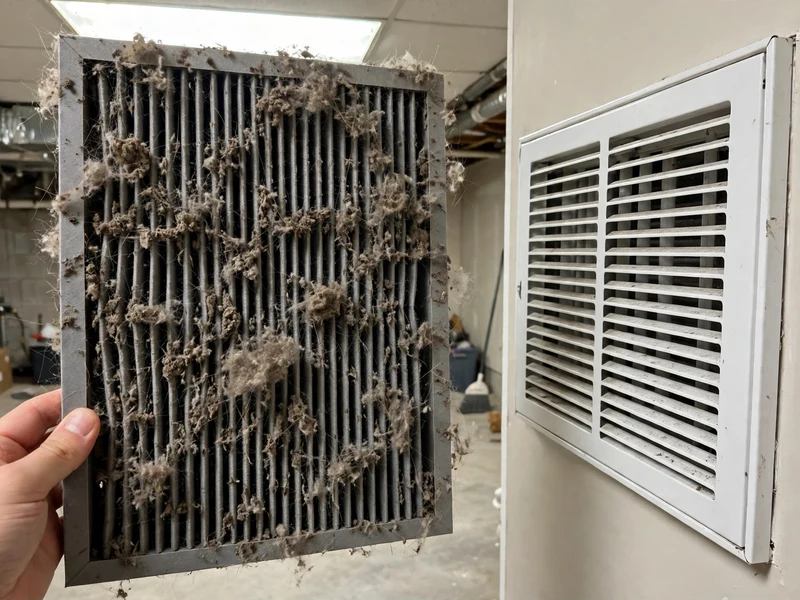
The most common reason a furnace limit switch keeps tripping is a dirty air filter. A filter thick with dust creates a barrier the blower cannot pull enough return air through. The heat exchanger keeps absorbing burner heat but cannot shed it, the cabinet temperature climbs, and the limit switch opens. This is also the easiest fix: hold the filter up to a light, and if you cannot see light through it, replace it.
Most Columbus homes do best with a filter change every one to three months during heating season, monthly if you have pets. If a fresh filter ends the trips, you found your culprit, but keep watching the next few heating cycles to confirm.
Cause 2: Closed Supply Vents and Blocked Return Grilles
Closing supply vents in unused rooms backfires with a modern furnace. Closed registers reduce the total air volume the blower can push through the system, so less heat leaves the cabinet per minute and the limit switch trips. Blocked return grilles cause the same problem from the other side: furniture against a return, rugs over floor returns, or curtains in front of wall returns all starve the blower of cool air.
Walk through your home and confirm every register is open and every return grille is clear. It is a five minute check that resolves many repeated limit trips.
Cause 3: A Dust Caked Blower Wheel
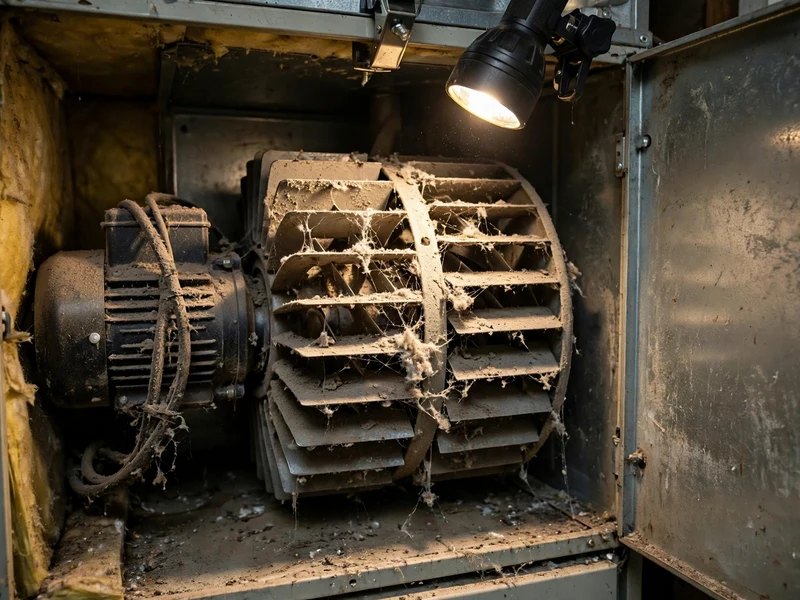
Even with a clean filter, the blower wheel, often called the squirrel cage, can be coated in years of dust. That buildup changes the shape of the fan blades, and a dirty wheel cannot move the required volume of air. Airflow drops, heat stagnates around the heat exchanger, and the limit switch trips again. This is common in systems that have missed annual maintenance for years.
Unlike a filter, a blower wheel is not a homeowner cleaning job: it must be removed and washed properly with care around the motor wiring and capacitor. If your filter is clean, your vents are open, and the switch still trips, a dirty blower is a prime suspect. This is exactly what a professional furnace tune up in Columbus OH prevents.
Cause 4: A Clogged Evaporator Coil or Restricted Ductwork
In homes with central air conditioning, the indoor evaporator coil sits directly above the furnace. If it is matted with dust, perhaps from years of running with a missing or ill fitting filter, it acts like a wall between the blower and the ductwork. Air cannot pass, heat cannot escape, and the limit switch does its job.
Ductwork restrictions cause similar trouble: crushed flexible duct in an attic or crawl space, a long forgotten closed damper, or heavy dust inside older ducts. A technician can measure static pressure in the duct system to confirm restriction instead of guessing.
Cause 5: A Failing Blower Motor or Weak Capacitor
Sometimes the airflow path is clear but the blower cannot do its job: a weak capacitor may keep the motor from reaching full speed, or worn bearings drag it down. Warning signs include humming at startup or weak register airflow with a clean filter. Check our blower motor replacement cost guide before approving work.
When the Limit Switch Itself Has Gone Bad
After years of thermal cycling, the limit switch itself can wear out: the internal bimetal disc fatigues and the switch starts opening below its rated set point. A switch that has tripped hundreds of times because of a never fixed airflow problem is especially likely to fail this way.
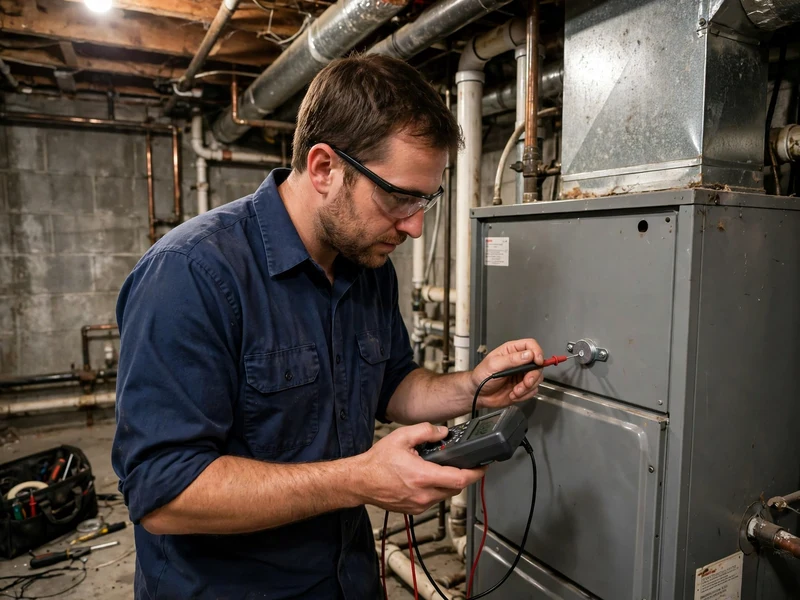
A technician tests this with a multimeter, comparing actual plenum temperatures against the switch rating. But note the order: a good technician confirms airflow is healthy before condemning the switch, because replacing the switch without fixing restricted airflow just restarts the cycle.
Call (380) 273-8167: We Diagnose Limit Switch Trips Same Day
How to Safely Reset a Tripped Limit Switch
Some limit switches reset automatically once the furnace cools. Others, especially auxiliary limits near the blower and flame rollout switches near the burners, have a small manual reset button between two wire leads. For a manual type: turn off power at the service switch, remove the access panel, press the reset button until you feel a click, replace the panel, restore power, and call for heat.
If the button does not click, it was not tripped, and something else is stopping your furnace. Our furnace not turning on checklist covers the other possibilities. The golden rule: if the switch trips again after a reset, stop resetting it. Repeated resets on an overheating furnace risk heat exchanger damage, which turns a minor repair into a major one.
Why You Should Never Bypass the Limit Switch
Every heating season someone is tempted to jumper around a tripping limit switch just to get heat for the night. Do not do this. With the safety circuit bypassed, burners can fire with no temperature regulation, and the heat exchanger can reach destructive temperatures in minutes, warp or crack, and release carbon monoxide into your home. A bypassed limit switch turns a nuisance outage into a life safety hazard.
Technicians never bypass a limit switch to leave a system running. If a contractor suggests it as a fix, get a second opinion with our furnace second opinion guide.
Limit Switch Trip or Something Else? Quick Comparison
| Symptom Pattern | Likely a Limit Trip | Likely Something Else |
|---|---|---|
| Runs 3 to 10 minutes, burners shut off while blower keeps running | Yes, classic limit behavior | |
| Never fires, blower runs nonstop from the start | Possible failed open switch | Pressure switch stuck open |
| Clicks repeatedly but burners never light | Unlikely | Ignition failure |
| Burners light, then drop out after seconds | Unlikely | Dirty flame sensor |
| Burning smell when the furnace trips | Possible overheating odor | See furnace smells guide |
Important Considerations Before You Call
First, check the simple things: replace the filter, open every register, and clear every return grille. If full heating cycles then complete without trips, you solved it, but keep the filter on a strict schedule. Second, note the pattern. Trips only on the coldest nights point to marginal airflow that fails under long run times, while trips every cycle point to a severe restriction or a failed switch.
Third, consider furnace age. Systems past 15 years with chronic limit trips deserve a hard look, since repeated overheating ages a heat exchanger prematurely. See our article on whether to repair a 15 year old furnace. Fourth, do not ignore a tripping switch because the house still eventually warms up. Every trip is thermal stress, and heat exchanger failure is the most expensive outcome in this story.
What Does Limit Switch Diagnosis and Repair Cost in Columbus OH
A diagnostic visit typically runs in line with standard furnace service call pricing in Columbus. If the fix is a new filter and opened vents, the visit itself is the whole cost. Cleaning a dirty blower wheel or coil adds labor, while replacing the limit switch itself is one of the least expensive furnace repairs. Our 2026 Columbus furnace repair cost guide has current local numbers.
The repair to avoid is a cracked heat exchanger from months of overheating, which often means furnace replacement instead of a repair. Calling early is the cheapest version of this story.
Frequently Asked Questions
Can a dirty air filter really cause the limit switch to trip?
Yes, it is the most common cause. A clogged filter chokes return airflow, heat builds up around the heat exchanger, and the switch opens to protect the system. A fresh filter often ends the trips immediately.
Is it safe to keep resetting the limit switch myself?
One careful reset after fixing an obvious cause like a dirty filter is reasonable. Repeated resets without fixing the cause are not safe, since each trip means the furnace overheated. If it trips again, call a technician.
Will my furnace run at all with a bad limit switch?
Usually not for heat. A switch failed open keeps the gas valve from opening, so the burners never fire. The blower may run continuously while the system stays locked out until the switch is replaced.
Does a tripping limit switch mean I need a new furnace?
Not by itself. Most trips come from airflow problems that are inexpensive to fix. Replacement only enters the conversation if repeated overheating damaged the heat exchanger or the furnace is past its service life.
Why does the limit switch trip more on very cold nights?
On the coldest nights the furnace runs its longest cycles, giving marginal airflow problems more time to build dangerous heat. A restriction tolerated in mild weather can push past the limit during an extended run.
Can closed vents in unused rooms trip the limit switch?
Yes. Closed supply vents reduce total system airflow and trap more heat in the cabinet. Keep all registers open during heating season.
How do I know if the switch itself is bad versus an airflow problem?
A technician measures plenum temperature while the furnace runs and tests the switch with a multimeter. If the switch opens while temperatures are still normal, the switch has failed. Airflow should always be verified first.
How much does it cost to fix a limit switch problem in Columbus?
Diagnosis plus a simple fix like a filter change or switch replacement is on the lower end of furnace repair pricing. For an upfront price, call (380) 273-8167 before approving any work.
Call (380) 273-8167: Stop the Tripping for Good
For more furnace troubleshooting help, browse the Columbus Furnace Repair blog.