TLDR Quick Answers
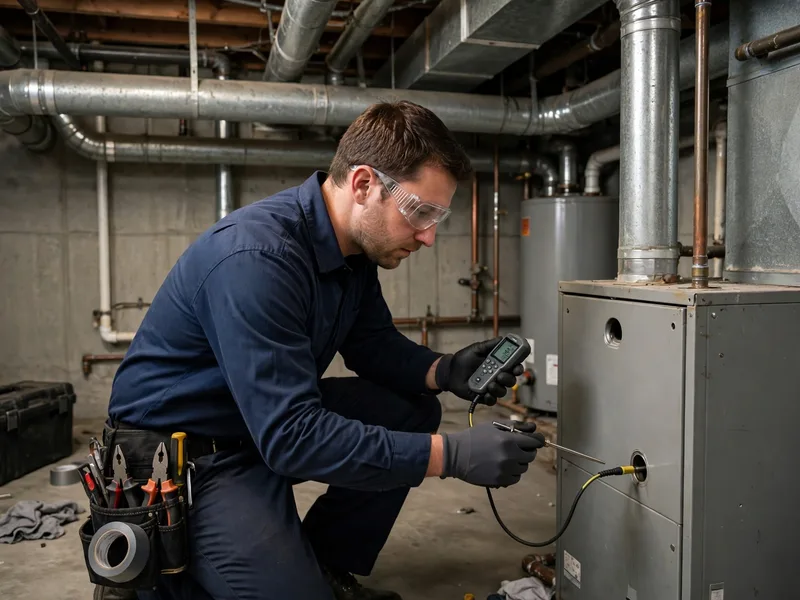
- What is furnace short cycling? The furnace turns on, runs a few minutes, shuts off before the house reaches the set temperature, and repeats all day.
- What causes a furnace to keep shutting off? Overheating from a clogged filter or blocked vents is the most common cause. A dirty flame sensor, thermostat trouble, and an oversized furnace follow.
- Can a dirty filter cause short cycling? Yes. A clogged filter starves airflow, the furnace overheats, and the limit switch kills the burners until it cools and tries again.
- Is short cycling dangerous? Rarely right away, because the limit switch keeps temperatures safe. Over time it fatigues the heat exchanger and wears out parts early.
- How much does it cost to fix? A filter swap costs a few dollars. Sensor work runs 80 to 250 dollars, and a diagnosis runs 75 to 150 dollars.
What Is Furnace Short Cycling?
Short cycling means the furnace cycles on and off far more often than it should. On a cold Columbus day a healthy furnace runs long and steady, 15 to 30 minutes at a time, then rests. A short cycling furnace fires, runs three or five or seven minutes, quits before the thermostat is satisfied, and starts all over again a few minutes later.
The pattern matters because a furnace burns the most gas and takes the most wear in its first minutes. Short cycles trap it in that hardest phase permanently, so it never reaches its steady and efficient stride. That is why short cycling shows up on your gas bill and on your repair history at the same time.
Why Does My Furnace Keep Shutting Off?
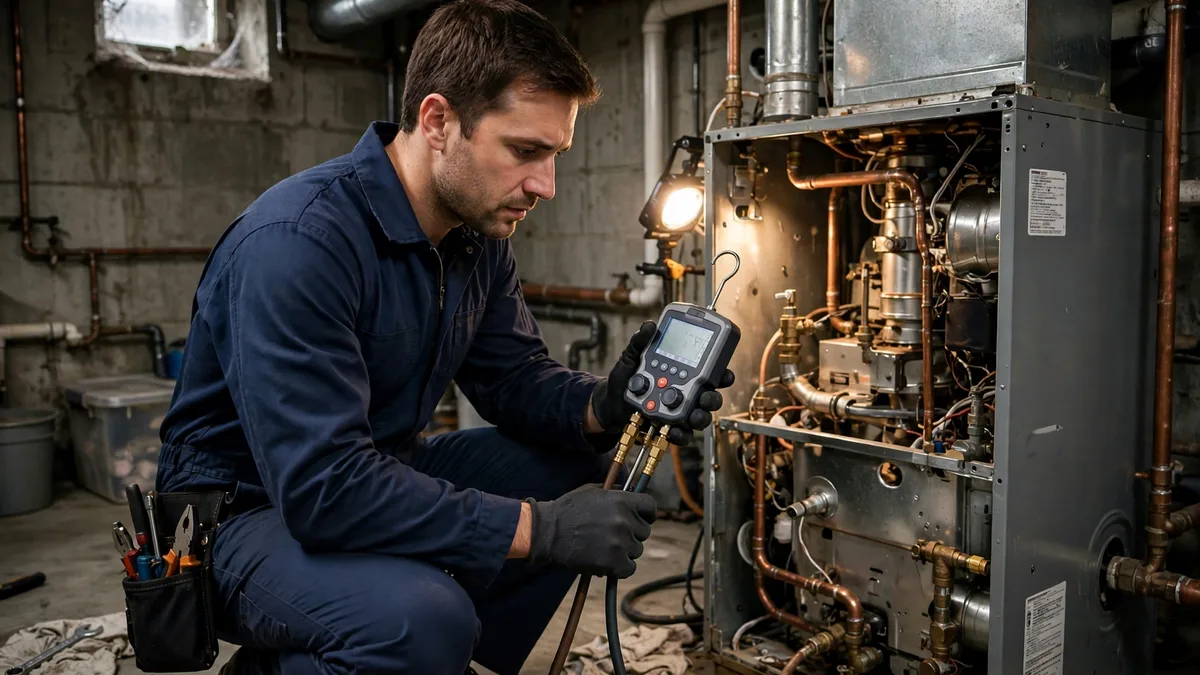
Overheating that trips the high limit switch is the most common cause. When airflow cannot carry heat away fast enough, the furnace overheats and the switch shuts the burners down to protect the heat exchanger. It cools, resets, fires again, and overheats again. A clogged filter, blocked vents, and a weakening blower motor are the usual culprits.
A dirty flame sensor is the second suspect, and the timing gives it away. If the furnace shuts off after a few seconds, oxidation on the sensor rod makes the board think the flame failed, and it cuts the gas. Our flame sensor cleaning and replacement guide explains how to clean that rod safely. Thermostat trouble comes third, because a thermostat in a draft or in direct sun gets fooled into ending the cycle early. An oversized furnace rounds out the list. It satisfies the thermostat in minutes, and there is no part to replace because the system was sized wrong at install.
The timing is your best clue. Seconds means flame sensor or ignition. Three to seven minutes means overheating. Uneven room temperatures point at thermostat placement or oversizing. If the furnace has quit entirely, our furnace not working hub walks the full sequence in order.
Can a Dirty Filter Cause Short Cycling?
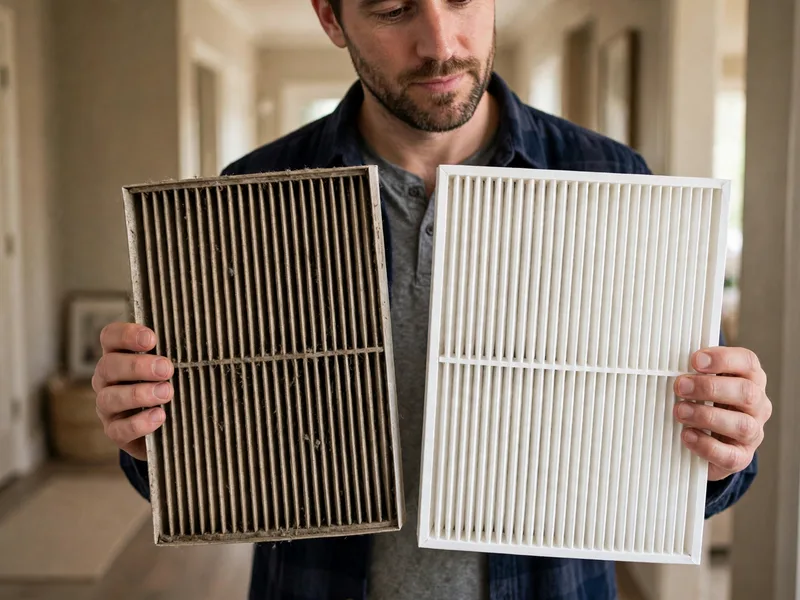
Yes, and it is the only cause most homeowners can fix themselves in five minutes. The furnace needs a constant stream of return air moving across the heat exchanger. A filter clogged with dust chokes that stream. The exchanger gets hotter until the limit switch kills the burners. Minutes later the furnace cools, tries again, and overheats again.
Pull the filter out and hold it up to a light. If you cannot see light through it, it is done, so replace it and note the size printed on the frame. Then walk the house and open your supply vents, because at least 80 percent should be fully open. Closing vents to push heat elsewhere raises internal heat and backfires. Check that returns are not blocked by furniture or rugs.
New filter in, vents open, and it still shuts off after a few minutes? Call (614) 555.0134, because a weakening blower or a failing switch needs a technician.
Is Short Cycling Dangerous?
Short cycling rarely turns dangerous right away, because the limit switch keeps temperatures safe. Not immediately dangerous is not the same as harmless, though. Repeated overheating and cooling flexes the heat exchanger metal thousands of extra times per season. Fatigued exchangers crack, and a cracked exchanger can let exhaust gases, including carbon monoxide, into your air stream.
The colder risk is slower. If the problem worsens into a full lockout on a January night, short cycling becomes a no heat emergency and a burst pipe risk. And if your carbon monoxide detector alarms, get everyone out and call 911. That is never a wait and see situation.
How Much Does It Cost to Fix Short Cycling in Columbus?
The cause sets the price, and the causes sit in very different price bands. A diagnostic visit generally runs 75 to 150 dollars. For context, the average furnace repair in Columbus is 304 dollars, and most repairs land between 123 and 505 dollars according to Angi, so most short cycling fixes land below or inside that average.
| Cause | Typical Fix | Typical Cost |
|---|---|---|
| Clogged filter or blocked vents | Filter swap, vents opened | A few dollars, no visit needed |
| Dirty flame sensor | Cleaning or replacement | 80 to 250 dollars |
| Worn ignitor | Replacement | 150 to 300 dollars |
| Faulty thermostat | Replacement | 190 to 450 dollars |
| Weakening blower motor | Repair or replacement | 150 to 2000 dollars by motor type |
You approve an exact quote before any part is replaced, and our Columbus furnace repair cost guide breaks down the other common repairs. The one exception is the oversized furnace, where the honest options are living with it or correcting the size at replacement time.
Will Short Cycling Damage My Furnace?
Yes, short cycling is slow motion damage even while the house stays warm. The ignitor takes the worst of it, because every cycle is a full ignition event and ignitors have a finite number of heating cycles in them. A furnace that should start 40 times a day but starts 200 times burns through ignitors years early. The blower motor wears hardest at startup. The heat exchanger fatigues. And the gas bill climbs, because the furnace lives in its least efficient minutes.
Short cycling is the furnace asking for a small repair now instead of a big one later. The longer it runs this way through a Columbus winter, the more a modest fix turns into a motor or exchanger problem. Our furnace keeps shutting off service page covers how a technician separates the causes, or you can call (614) 555.0134 and describe the timing of the shutdowns.
Important Considerations
A carbon monoxide alarm changes the category instantly. Get everyone out and call 911 first.
Closing vents to force heat into certain rooms makes overheating worse. Most vents should stay fully open.
One reset is reasonable. Repeated resets are not.
Timing tells the story better than guessing. Seconds and minutes of run time lead to completely different repairs.
Frequently Asked Questions
Why does my furnace keep shutting off?
Most often it is overheating. A clogged filter or blocked vents starve the furnace of airflow until the high limit switch shuts the burners down, then it cools, retries, and overheats again. If it dies after a few seconds, a dirty flame sensor is likelier. However, thermostat placement and an oversized furnace round out the list, which is why the run time matters.
Why does my heater keep turning off after only five minutes?
A five minute run followed by a shutdown is the classic signature of a limit switch trip. The furnace heats up, cannot move the air fast enough, overheats, and the safety switch kills the burners. However, if a fresh filter changes nothing, the blower or the switch itself needs a technician.
What does a furnace safety lockout mean?
A lockout is the control board shutting the system down after repeated failures, such as failed ignition attempts or repeated limit switch trips. It is the furnace protecting itself. One reset after a cool down is fine. However, a furnace that keeps locking out is reporting a real fault, and repeated resets will not fix it.
How many times per hour should a furnace cycle?
A healthy furnace on a cold day runs a few long cycles per hour, often 15 to 30 minutes each. A furnace starting every few minutes and stopping quickly is cycling far beyond normal. However, mild weather naturally shortens run times, so judge the pattern on a genuinely cold day.
Can a thermostat cause short cycling?
Yes. A thermostat in a draft, in direct sun, or above a heat source reads the room wrong and ends cycles early. A failing temperature sensor inside it does the same thing. However, thermostat faults usually come with uneven room temperatures, while overheating trips feel uniform across the house.
Will a new filter always fix short cycling?
No. A loaded filter is the most common cause, so changing it is the right first step, and it is cheap. When the filter was not the whole story, the blower, the limit switch, or a sensor is behind the shutdowns. However, running a fresh filter for a few cycles costs nothing and tells you a great deal.
How much does a short cycling diagnosis cost in Columbus?
A diagnostic visit generally runs 75 to 150 dollars, and you approve the exact repair quote before any part is replaced. Many fixes land below the Columbus average repair of 304 dollars reported by Angi. However, a blower motor can exceed that average, so the quote matters more than the guess.
Does Columbus Furnace Repair fix short cycling the same day?
Yes, in most cases, because the common causes are diagnosed and repaired in one visit. Describing the shutdown timing when you call (614) 555.0134 helps the technician arrive prepared. However, during the coldest stretches the schedule fills early, so a morning call gets an earlier slot.
More furnace guides are on our furnace repair blog.