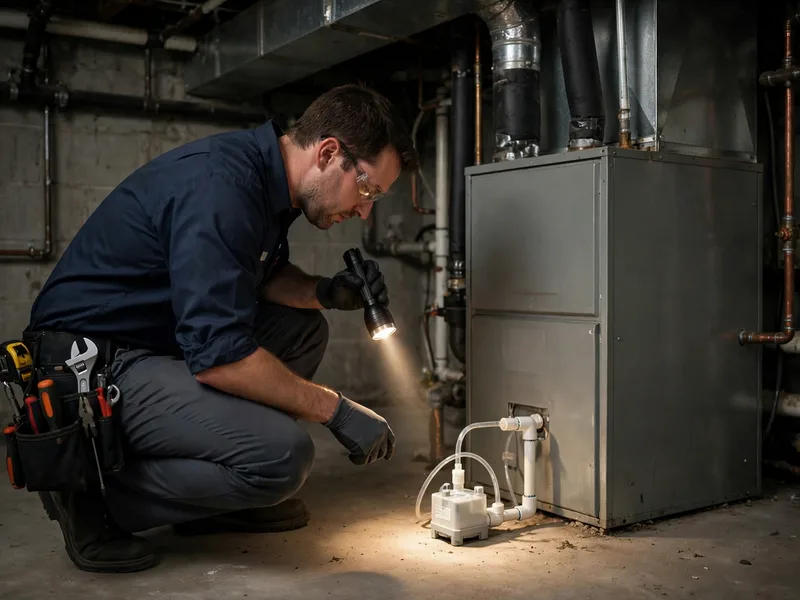
TLDR Quick Answers
- Why is water pooling under my furnace? On a high efficiency furnace, a clogged condensate drain line or trap is the most common cause. The furnace makes water by design, and the drain path is blocked.
- Is it normal for a furnace to drain water? Yes, for a condensing furnace rated 90 percent AFUE and up. Draining is normal. Water pooling on the floor never is.
- Is a leaking furnace dangerous? Usually it is a maintenance problem, not a danger. It becomes urgent when water reaches electrical parts or the leak traces to a cracked heat exchanger.
- Can I run my furnace while it leaks? For a day or two during cold weather, usually yes. A growing pool means shut it off at the power switch and mop up.
- How much does it cost to fix a furnace leaking water? Drain and trap cleaning runs 100 to 250 dollars, after a diagnostic visit of 75 to 150 dollars.
Why Is Water Pooling Under My Furnace?
The answer depends on which furnace you own, so identify the type first. A high efficiency condensing furnace, usually vented with white PVC pipes, makes water on purpose. A hard working unit can produce several gallons of condensate in a day of cold weather.
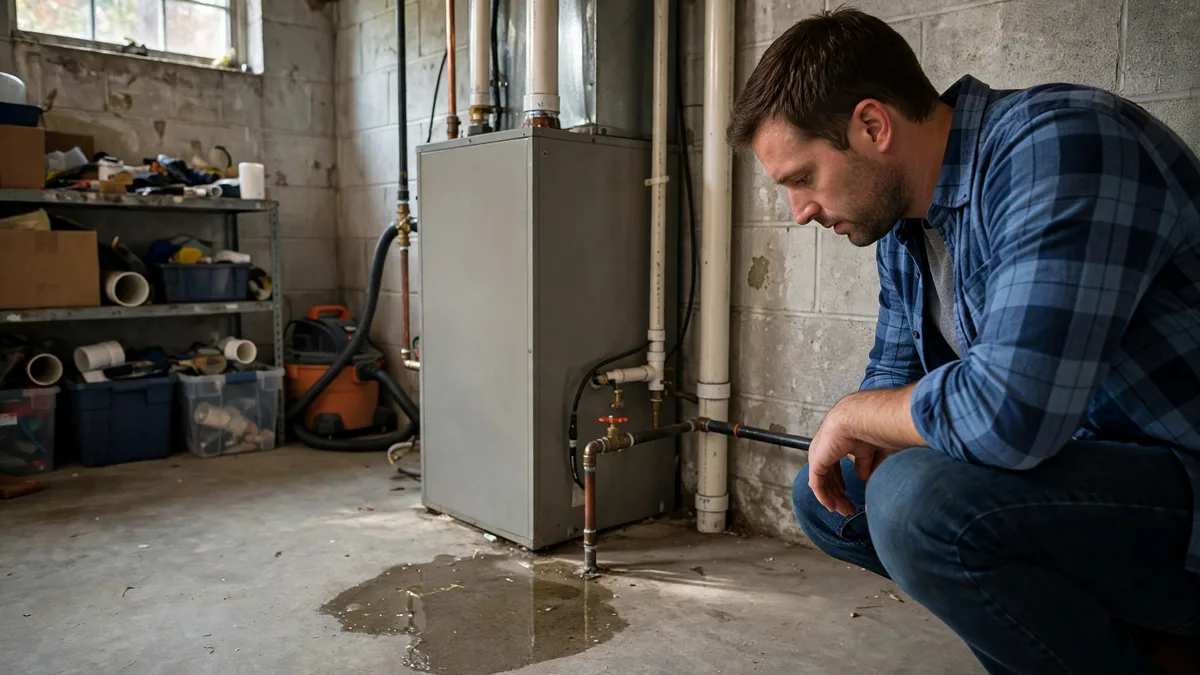
That water is supposed to travel through a trap and a drain line to a floor drain or a small pump. A pool on the floor means something in that path has failed.
A standard efficiency furnace with a metal vent pipe produces essentially no water in normal operation. Water under that furnace points somewhere else entirely: a leaking whole house humidifier on the ductwork, the air conditioning coil drain above the furnace in summer, or rarely a heat exchanger problem.
What Is Furnace Condensate and Where Does It Drain?
Burning natural gas produces carbon dioxide and water vapor. A condensing furnace cools the exhaust so much that the vapor turns to liquid inside the cabinet. That liquid is condensate, mildly acidic, which is why it travels through plastic plumbing.
From there the path is short. Condensate collects in a trap, flows through a small drain line, and ends at a floor drain, a utility sink, or a condensate pump that lifts it to a drain.
Every joint along that path is a potential leak point. The standing water inside the trap is also a natural home for algae and sludge, which is why a yearly furnace tune up includes a trap and line cleaning.
What Are the Most Common Causes of a Furnace Leaking Water?
The clogged condensate drain line or trap causes the majority of these calls. Algae and debris build up season after season until condensate backs up and overflows at the furnace.
After the clog come the plumbing failures. Small plastic drain lines grow brittle with age or get knocked loose during a filter change. If the furnace drains upward into a pump, a dead pump leaves the reservoir to overflow onto the floor. Ice or debris can also plug the line where it exits the house.
The rarest cause is the serious one. A cracked heat exchanger can put water where it does not belong, and that is a warning, not a nuisance. The last common culprit is innocent: a leaking humidifier mounted on the ductwork, dripping down the cabinet.
Our furnace leaking water repair service in Columbus handles each of these causes, including same day drain cleaning.
Is a Leaking Furnace Dangerous?
Usually not, and it still deserves prompt attention. Water damage compounds fast, soaking flooring and drywall while feeding mold. Water that reaches the control board or blower motor can short electronics, turning a cheap drain repair into a board replacement.
That rare case is the cracked heat exchanger. Cracks can let combustion gases, including carbon monoxide, mix into the air your family breathes. A drain leak itself cannot poison anyone. Water tied to a cracked exchanger is a different category of problem.
The safety rules are simple. If a leak comes with heavy corrosion, soot around the burners, a metallic smell, or a carbon monoxide alarm, leave the house and call 911 first. If you smell gas, the same drill applies before any furnace call. Sudden leaks that kill the heat in freezing weather qualify for emergency furnace repair in Columbus.
Can I Run My Furnace While It Is Leaking Water?
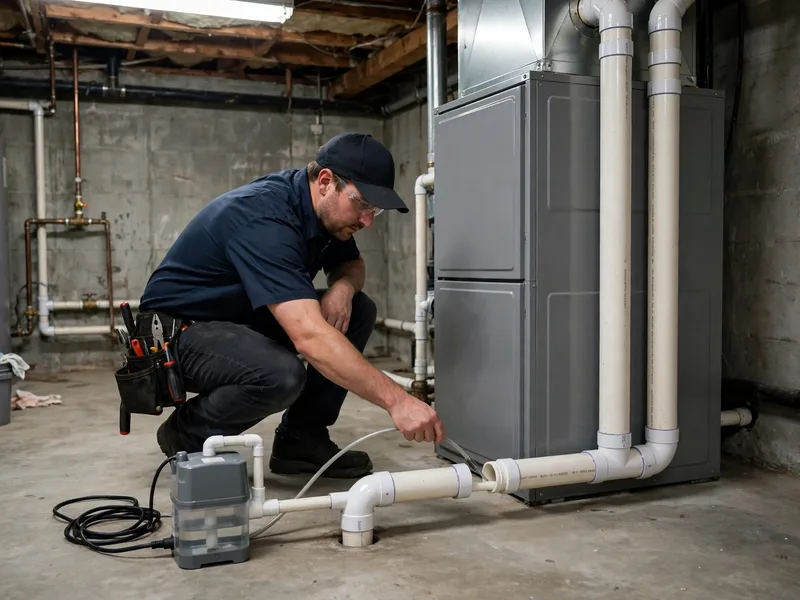
Short term, usually yes. A condensate overflow will not stop the furnace from heating, and during a Columbus cold snap heat is not optional.
Watch the water level while you run it. If the pool is growing, shut the furnace off at its power switch and mop up, because water and furnace electronics do not mix. A furnace that stops entirely with water around it may have been shut down by its own backup safety switch.
Set a deadline either way. Running while it leaks is a bridge of a day or two until the repair, not a winter strategy. Corrosion starts immediately.
Water spreading under the furnace right now? Call (614) 555.0134.
How Much Does It Cost to Fix a Furnace Leaking Water?
Leak repairs sit at the affordable end of furnace work because the common causes are plumbing simple. A diagnostic visit of 75 to 150 dollars confirms which row you are in before money goes to parts.
| Repair | Typical Cost | Best When |
|---|---|---|
| Diagnostic visit | 75 to 150 dollars | The source of the water is unclear |
| Drain line and trap cleaning | 100 to 250 dollars | Condensate is backing up and overflowing |
| Condensate pump replacement | 150 to 350 dollars | The pump reservoir overflows |
| Drain tubing repair | 100 to 300 dollars | Lines are cracked, brittle, or knocked loose |
For context, the average furnace repair in Columbus is 304 dollars, and most repairs fall between 123 and 505 dollars according to Angi. Most leak fixes land at or below that average. The exception is the cracked heat exchanger, which is not repaired but replaced, and a new furnace runs 2000 to 5400 dollars installed according to HomeGuide.
Important Considerations
Water on the floor is never normal, even on a condensing furnace. Pooling means the drain path has failed.
A standard efficiency furnace produces no water at all in heating season. Any water under one means the source is the humidifier, the cooling coil, or something structural.
Summer leaks under the same cabinet usually belong to the air conditioner. The coil above the furnace shares the drain, so the same clog floods the floor in July.
A leak that returns after drain cleaning points deeper, toward pump failure, a frozen termination, or exchanger damage.
Frequently Asked Questions
Why is water leaking from the bottom of my furnace?
On a condensing furnace it is almost always the condensate system: a clogged drain line or trap, cracked tubing, or a failed pump backing water up until it overflows at the cabinet. On a standard efficiency furnace, suspect the humidifier or the cooling coil drain instead. However, water with no visible drain source deserves a professional look, because the rare serious causes hide quietly.
Is a furnace leaking water an emergency?
A slow condensate drip is a same day or next day repair, not a midnight emergency. It turns urgent when water spreads toward electrical components, the furnace shuts down from its backup safety switch, or corrosion suggests a cracked heat exchanger. However, any carbon monoxide alarm overrides the schedule completely, and the house gets emptied before the furnace gets examined.
Is it normal for a furnace to drain water?
For a condensing furnace, yes. Producing and draining water is how it reaches its high efficiency rating, and several gallons a day in cold weather is expected. Water belongs inside the trap and line, never on the floor. However, a standard efficiency furnace produces no water, so any moisture under one means a different source hunt entirely.
Can a leaking furnace cause carbon monoxide poisoning?
A drain leak itself cannot. Water from a cracked heat exchanger is the dangerous version, because cracks can let combustion gases into household air. Corrosion, soot, a metallic smell, or an alarm alongside a leak means treat it as urgent. However, most leaks are drain clogs, and a diagnostic confirms which kind you have before anyone discusses replacement.
How much does it cost to fix a furnace leaking water?
Most fixes are condensate work. Cleaning a clogged line and trap runs 100 to 250 dollars, and a replacement pump costs 150 to 350 dollars. Columbus Furnace Repair confirms the source during a diagnostic visit of 75 to 150 dollars, then quotes the repair before work begins. However, a cracked heat exchanger changes the conversation to replacement, which is why tracing the true source comes first.
Can I keep running my furnace while it leaks?
Usually, for a day or two, and only while the pool stays small and away from the control board. Heat matters in a Columbus winter, and a condensate overflow does not stop the burners. Shut the unit off if the water grows or reaches wiring. However, running it for weeks turns a drain cleaning into corrosion damage, so the repair date should be set immediately.
Why does my furnace leak only in summer?
That water almost always belongs to the air conditioner. The cooling coil above the furnace produces condensate all summer, and it shares the drain path with the furnace. A clogged line floods the floor in July exactly as it would in January. However, the fix is the same drain cleaning, so one visit settles both appliances before heating season arrives.
Does Columbus Furnace Repair fix furnace leaks the same day?
Yes, in most cases. Drain cleaning, tubing repair, and pump swaps are single visit jobs, and technicians carry the common fittings. Call (614) 555.0134 and mention whether the water is clear, rusty, or growing, because that detail speeds up the diagnosis. However, a suspected cracked heat exchanger gets a safety inspection first, and that finding can change the plan.
More furnace guides are collected on our furnace repair blog.