TLDR Quick Answers
- What is a furnace flame sensor? A thin metal rod that confirms the burner actually lit. If it cannot detect a flame, the furnace shuts the gas off within seconds.
- Why does a furnace start then shut off after a few seconds? A dirty flame sensor is the most common cause. Oxidation on the rod blocks the flame signal.
- How do you clean a flame sensor? Turn the power off, remove the rod held by a single screw, polish it with fine sandpaper until the metal brightens, then reinstall it.
- When should it be replaced instead? When the rod is pitted or cracked, the ceramic base is broken, or cleaning only helps for a few weeks.
- How much does professional service cost? Cleaning usually comes with a diagnostic visit of 75 to 150 dollars. Replacement runs 80 to 250 dollars.
What Is a Furnace Flame Sensor?
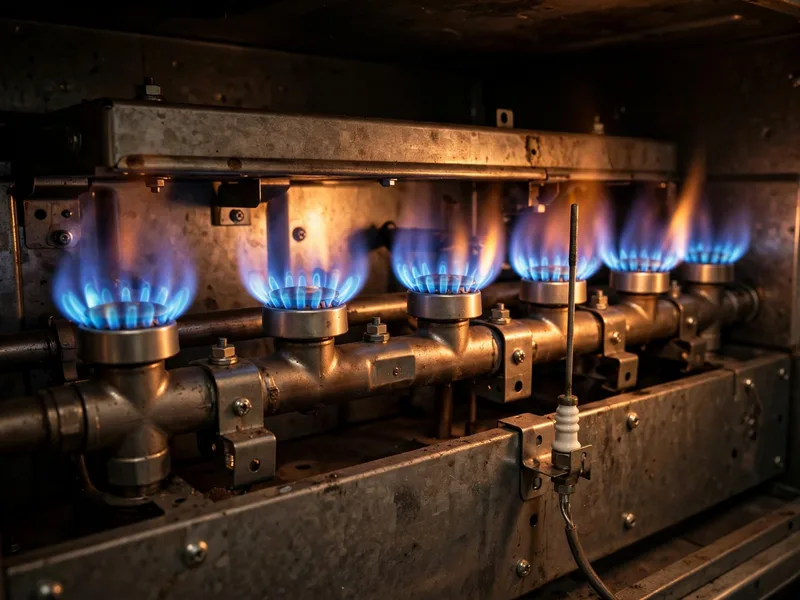
A flame sensor is a safety device. It is a slender metal rod mounted in front of one of the burners, and its only job is to answer one question: is there actually a flame? Each time a furnace starts, the ignitor glows, the gas valve opens, and the burners light. The sensor must detect that flame within a few seconds. If it does, the furnace keeps running. If it does not, the control board shuts the gas off, because unburned gas in a furnace with no flame is a hazard.
The sensor works through a tiny electrical signal. Flame conducts a microamp current between the rod and the burner, and the board reads it as proof of fire. However, this depends on the rod surface staying clean. Oxidation and carbon buildup insulate the rod until the board can no longer read the signal.
Why Does a Furnace Start Then Shut Off After a Few Seconds?
A dirty flame sensor is the most common cause of this pattern. The furnace lights, runs for 3 to 10 seconds, shuts down, retries, and then locks out. The burners lit perfectly, but the oxidized rod cannot prove that to the board, so the board kills the gas.
The timing of the shutdown is the biggest clue a homeowner gets for free. A furnace that dies within seconds has a flame verification problem, meaning the sensor, a weak ignitor, or a failing board. One that runs for several minutes first is usually overheating.
How Do You Clean a Furnace Flame Sensor?
Cleaning takes 15 to 30 minutes with fine grit sandpaper or emery cloth, a quarter inch nut driver, and a flashlight.
- Turn the power off. Use the furnace power switch, which looks like a light switch on or beside the unit. Switch the breaker off too, and let the furnace cool completely before you start.
- Open the burner compartment. Most front panels lift off.
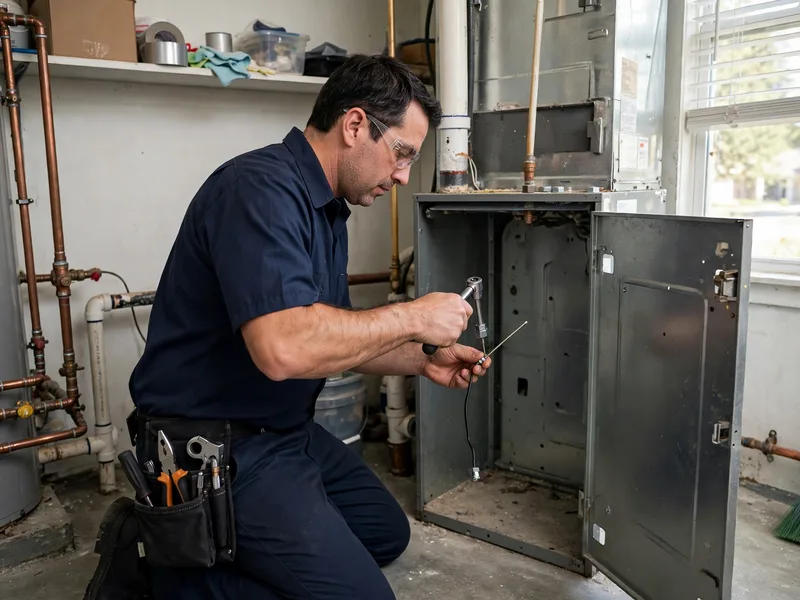
- Find the flame sensor. It is the thin metal rod in front of the burner assembly, held by one screw with one wire connected. Never touch the hot surface ignitor nearby.
- Remove the rod. Disconnect the wire, take out the screw, and slide the sensor out, noting which way it faced.
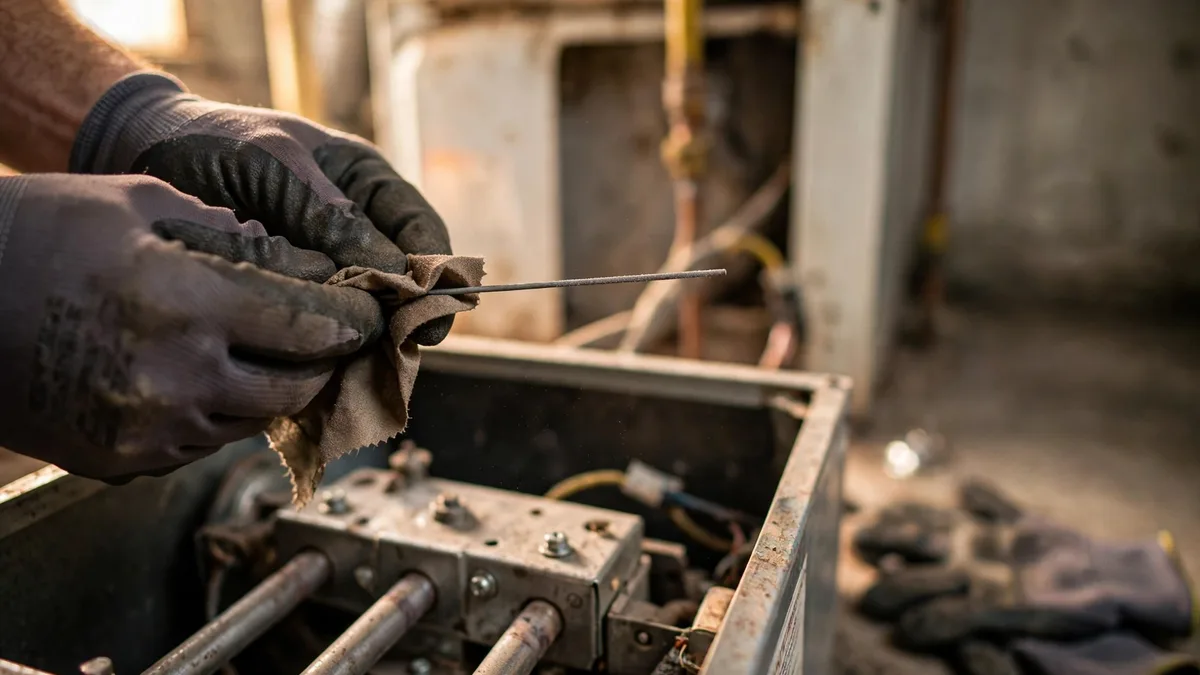
- Polish the rod. Rub gently along its length until the dull grey coating gives way to brighter metal. Wipe it with a dry cloth. Never use steel wool, because its fibers bake onto the rod.
- Reinstall and test. Put the rod back as it sat, replace the screw, reconnect the wire, restore power, and raise the thermostat. The burners should light and stay lit until the thermostat is satisfied.
Furnace still shutting off after cleaning? Call (614) 555.0134 for a same day diagnostic in Columbus.
However, heavy rust or a cracked ceramic insulator means cleaning is not the right move. Our flame sensor cleaning and replacement service covers that case in a single visit.
When Should a Flame Sensor Be Replaced Instead of Cleaned?
Replace the sensor when the rod is pitted, corroded, or cracked, when the ceramic insulator at its base is broken, or when cleaning fixes the shutdowns for only a few weeks.
Cleaning restores a surface that is dirty but intact. It cannot repair physical damage, and a damaged sensor will keep failing, usually on the coldest night of the season.
However, shutdowns that continue with a confirmed good sensor point elsewhere. The ignitor, the control board, and the gas supply can all imitate a bad sensor.
How Much Does Flame Sensor Cleaning or Replacement Cost?
Professional cleaning is typically bundled into a diagnostic visit of 75 to 150 dollars in Columbus. Replacement, parts and labor combined, typically costs 80 to 250 dollars. The average furnace repair in Columbus is 304 dollars according to Angi.
| Option | Typical Cost | Best When |
|---|---|---|
| Cleaning it yourself | Cost of sandpaper only | The rod is intact and oxidized |
| Professional cleaning | 75 to 150 dollars with diagnostic | You prefer not to open the furnace |
| Sensor replacement | 80 to 250 dollars | The rod is pitted, cracked, or failing again |
However, these ranges depend on the brand and on burner access. The exact price should always be quoted before work begins. Our Columbus furnace repair cost guide breaks down what other common repairs run.
What If Cleaning the Flame Sensor Does Not Fix It?
If a clean sensor does not stop the shutdowns, the cause is usually one of the mimics. A weak or cracked ignitor lights the gas inconsistently. A failing control board loses the ability to read a good signal. Gas pressure problems starve the burners, and carbon buildup restricts the flame the sensor needs to see.
A technician reads the actual flame signal in microamps instead of swapping parts on suspicion. Columbus homeowners can book a same day diagnostic with Columbus Furnace Repair at (614) 555.0134. However, if the house is losing heat in below freezing weather, treat it as an emergency, because frozen pipes cost far more than any service call. Our furnace not working troubleshooting hub walks through the other causes in order.
Important Considerations
A gas smell changes everything. If you smell gas, stop, leave the furnace alone, get out of the home, and call for help from outside.
Never touch the hot surface ignitor. It is fragile, skin oils shorten its life, and a broken ignitor turns a cheap repair into a larger one.
Steel wool is the wrong tool. Its fibers shed onto the rod and burn in place, so the next failure arrives faster.
Two cleanings in one season is a signal, not a routine. The sensor is at the end of its life and should be replaced.
Frequently Asked Questions
How do I tell if my furnace flame sensor is dirty?
The classic sign is a furnace that lights, runs for a few seconds, then shuts off and repeats the cycle. A removed sensor confirms it, because the rod shows a dull grey coating instead of bright metal. However, an aging control board can look identical, so a clean sensor that still fails needs a deeper diagnosis.
Can I clean a furnace flame sensor myself?
Yes. It is one of the more approachable furnace jobs for anyone comfortable cutting the power and handling one screw and one wire. Use fine sandpaper, never touch the ignitor, and stop if you smell gas. However, anyone unsure about working inside a gas appliance should let a technician handle it, because professional cleaning is inexpensive.
What is the difference between a bad ignitor and a bad flame sensor?
An ignitor creates the flame. A flame sensor verifies it. With a bad ignitor, the burners never light at all. With a bad flame sensor, the burners light and then shut off within seconds, because the board believes there is no flame. However, a weak ignitor can look similar, so both parts are normally tested during a diagnostic. Read more about furnace ignitor replacement.
How often should a flame sensor be cleaned?
Once a year, as part of routine furnace maintenance. Oxidation builds up gradually over each heating season, so annual cleaning prevents most mid season shutdowns. However, dusty homes under renovation may need it more often. A yearly furnace tune up includes this cleaning.
Why does my furnace keep shutting off after a few minutes instead of a few seconds?
Shutdowns after several minutes usually indicate overheating. The furnace gets too hot, and the high limit switch kills the burners to protect the heat exchanger. Clogged filters and failing blower motors are the usual causes. However, the repair is completely different, so timing the shutdown is the fastest way to narrow it down. See why a furnace keeps shutting off.
How much does it cost to have a flame sensor cleaned in Columbus, Ohio?
Cleaning normally comes with a diagnostic visit of 75 to 150 dollars, and replacement runs about 80 to 250 dollars. Columbus Furnace Repair quotes the exact price before work starts. However, if the diagnosis finds a different failed part, nothing is replaced without approval first.
Does Columbus Furnace Repair offer same day flame sensor service?
Yes. Cleaning and replacement finish in a single visit in most cases, and no heat calls get priority during freezing weather. The sensor is a stocked part for most major brands, including Carrier, Trane, Lennox, and Goodman. However, availability depends on call volume during cold snaps. For urgent no heat situations, see emergency furnace repair in Columbus.
Can a dirty flame sensor be dangerous?
A dirty sensor causes the safety system to shut the furnace down, which is the safe outcome. Sensors are built to shut the gas off rather than let it flow unverified. However, repeatedly restarting a locking out furnace is not recommended. If it keeps locking out, have it inspected by calling (614) 555.0134.
More furnace guides are on our furnace repair blog.