
Why Does My Furnace Keep Shutting Off?
- Home
- Why Does My Furnace Keep Shutting Off?
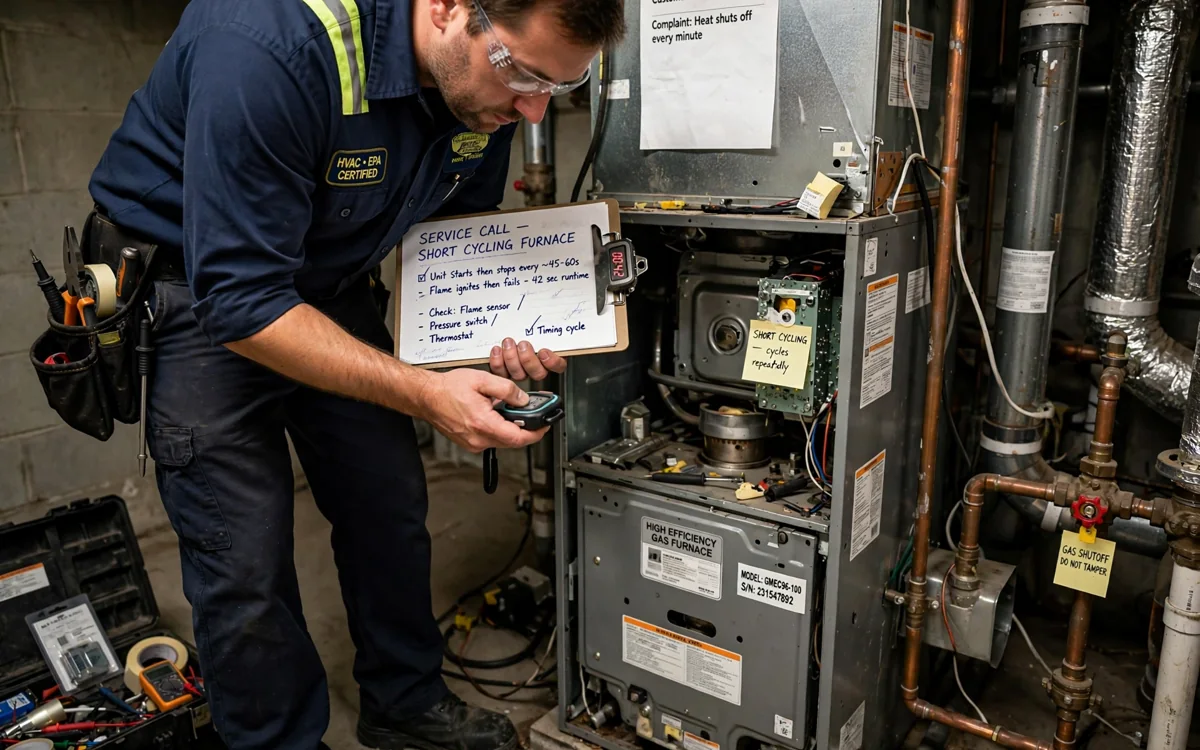
Why does my furnace keep shutting off?
Short cycling means your furnace turns on, runs a few minutes, then shuts off before reaching the temperature you set, then repeats. The usual cause is overheating: a clogged filter or blocked vents trap heat until the safety limit switch kills the burners. Flame sensor and thermostat problems can do it too. Call our 24/7 emergency line.
What is furnace short cycling?
Short cycling is exactly what it sounds like: the furnace cycles on and off far more often than it should. On a cold Columbus day, a healthy furnace runs long, steady cycles, firing up, running 15 to 30 minutes while it brings the house to temperature, then resting. A short-cycling furnace fires, runs three, five, maybe seven minutes, quits before the thermostat is satisfied, and starts the whole sequence again a few minutes later. All day. Every day.
Why the pattern matters: a furnace burns the most gas and takes the most wear in its first minutes, ignition, warm-up, getting the blower up to speed. Short cycles mean your furnace lives permanently in its least efficient, hardest-on-parts phase and never reaches steady-state efficiency. That’s why short cycling shows up on your gas bill and on your repair history at the same time.
Can a dirty filter cause short cycling?
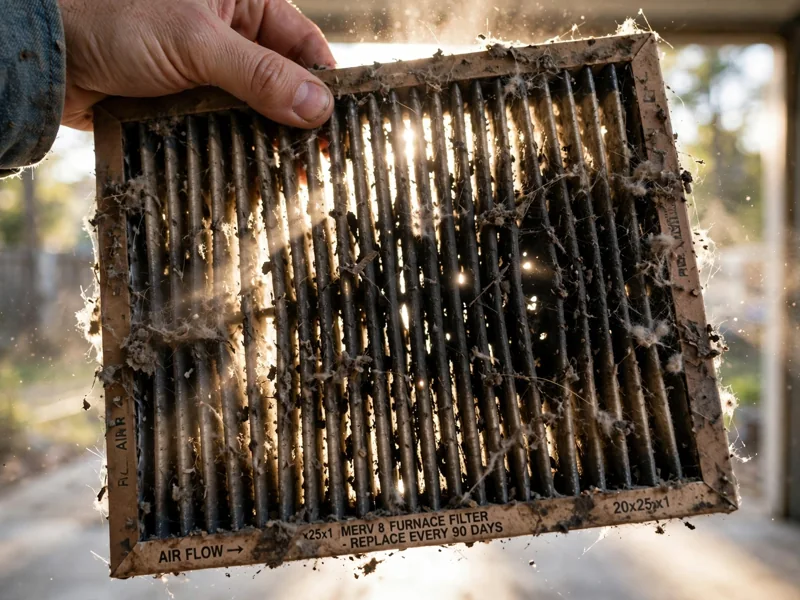
Yes, it’s the single most common cause, and the only one most homeowners can fix themselves in five minutes. The logic is simple: your furnace needs a constant stream of cool return air moving across the heat exchanger to carry heat into the ducts. A filter clogged with dust chokes that stream. The exchanger gets hotter and hotter; the high-limit switch does its job and kills the burners. Minutes later the furnace has cooled, tries again, and overheats again.
Check these before you call:
- The filter. Pull it out and hold it up to a light. If you can’t see light through it, it’s done. Replace it (note the size printed on the frame).
- Supply vents. Walk the house and open vents, at least 80% should be fully open. Closing vents to “push heat elsewhere” raises internal pressure and heat; it backfires.
- Return vents. Make sure returns aren’t blocked by furniture, rugs, or storage boxes.
[CONVERSION BOX: “New filter, vents open, and it still shuts off after a few minutes? Then the filter wasn’t the whole story. A weakening blower, a failing limit switch, or a sensor problem needs a technician: our 24/7 emergency line.”]
Is short cycling dangerous?
Short cycling rarely explodes or catches fire, the limit switch exists precisely to keep temperatures safe. But “not immediately dangerous” is not the same as harmless:
- Heat exchanger stress. Repeated overheating and cooling cycles flex the exchanger metal thousands of extra times per season. Fatigued exchangers crack, and a cracked exchanger can let exhaust gases (including carbon monoxide) into your air stream.
- Frozen pipes and no heat. If the underlying problem worsens into a full lockout on a January night, Columbus averages 29.6°F in January with lows near 22°F (NOAA), short cycling becomes a no-heat emergency and a burst-pipe risk. If it has stopped entirely in freezing weather, use 24/7 emergency repair.
- Carbon monoxide alarms always change the category. If your CO detector alarms while the furnace is misbehaving: get everyone out and call 911. That’s never a “wait and see.”
So: short cycling with steady heat is a book-it-this-week repair. Short cycling that degrades into lockouts, blowing cold air, or any CO alarm is a call-now problem. Now blowing cold air too? It may be an ignition problem.
- Heat exchanger stress. Repeated overheating and cooling cycles flex the exchanger metal thousands of extra times per season. Fatigued exchangers crack, and a cracked exchanger can let exhaust gases (including carbon monoxide) into your air stream.
- Frozen pipes and no heat. If the underlying problem worsens into a full lockout on a January night, Columbus averages 29.6°F in January with lows near 22°F (NOAA), short cycling becomes a no-heat emergency and a burst-pipe risk. If it has stopped entirely in freezing weather, use 24/7 emergency repair.
- Carbon monoxide alarms always change the category. If your CO detector alarms while the furnace is misbehaving: get everyone out and call 911. That's never a "wait and see."
- Preventive Care, A seasonal tune-up keeps small wear items from becoming mid-winter breakdowns.
- Follow-Up Support, Post-repair testing and honest advice to keep your furnace heating efficiently.
How much does it cost to fix short cycling in Columbus?
The cause sets the price, and the causes sit in very different price bands:
| Cause | Typical fix cost |
|---|---|
| Clogged filter / blocked vents | DIY filter swap (a few dollars); no visit needed |
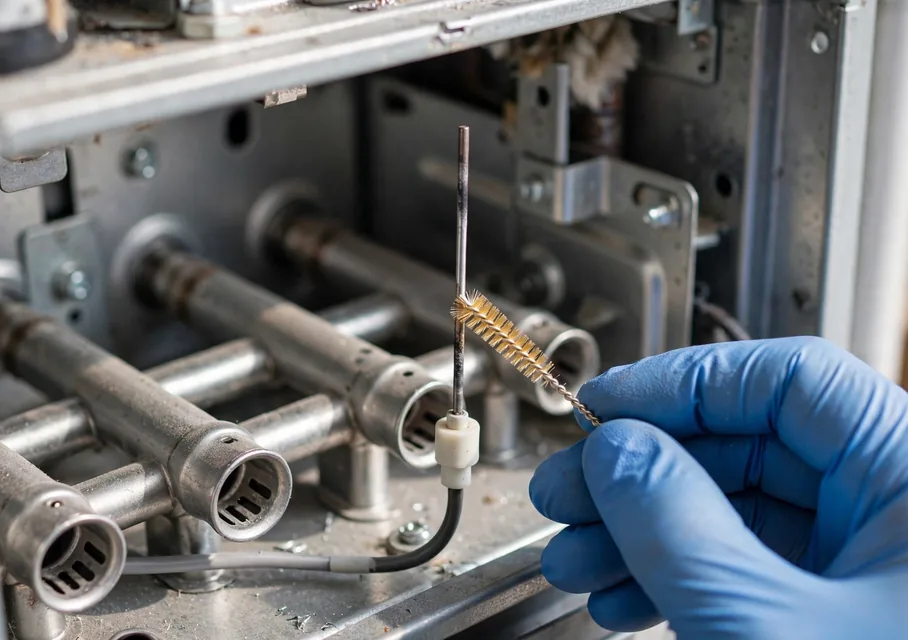
| Flame sensor cleaning or replacement | $80 to $250 |
| Ignitor replacement (worn from constant re-lighting) | $150 to $300 |
| Thermostat replacement (faulty sensor or placement issue) | $190 to $450 |
| Blower motor work (weakening motor behind the overheating) | $150 to $2,000+ by motor type |
A diagnostic visit to pin down which cause you have generally runs $75 to $150 (published HVAC cost data). For context, the average furnace repair in Columbus is $304, with most repairs between $123 and $505 (Angi), most short-cycling fixes land below or inside that average. You’ll approve an exact quote before any part is replaced. See the full Columbus furnace repair cost guide.
The exception is the oversized furnace: there’s no part to swap, and the honest options are living with it or right-sizing at replacement time.
Will short cycling damage my furnace?
Yes, short cycling is slow-motion damage, even when the house stays warm:
- The ignitor takes the worst of it. Every cycle is a full ignition event, and hot surface ignitors have a finite number of heat cycles in them. A furnace that should start 40 times a day starting 200 times a day burns through ignitors years early.
- The heat exchanger fatigues, as described above, thermal expansion and contraction, over and over.
- The blower motor wears at startup, its hardest moment.
- Your gas bill climbs, because the furnace spends its life in warm-up, its least efficient minutes.
Short cycling is your furnace asking for a relatively small repair now instead of a big one later. The longer it runs like this through a Columbus winter, the more it converts a $150 to $300 fix into a motor or exchanger problem.
Fix the cycle before the cycle breaks the furnace. Short cycling turns cheap parts into expensive ones. If a filter change didn’t cure it, get the real cause diagnosed today.
[BIG CALL BUTTON: 📞 our 24/7 emergency line] Same-day service across Columbus & suburbs · Upfront pricing · All major brands
Frequently Asked Questions
Why does my furnace keep shutting off?
Most often, it’s overheating: a clogged filter or blocked vents starve the furnace of airflow until the high-limit safety switch shuts the burners down, then it cools, retries, and overheats again. If it shuts off after only a few seconds, a dirty flame sensor is the likelier cause. Thermostat placement problems and an oversized furnace round out the usual list.
Why does my heater keep turning off after only five minutes?
A five-minute run followed by a shutdown is the classic signature of a limit-switch trip: the furnace heats up, can’t move the air fast enough, overheats, and the safety switch kills the burners. Check your filter and make sure most of your vents are open. If a fresh filter doesn’t change it, the blower or the limit switch itself needs a technician.
What does a furnace safety lockout mean?
A lockout is the control board shutting the system down after it detects repeated failures, several failed ignition attempts, or limit switch trips in a row. It’s the furnace protecting itself. You can try one reset (power off, wait a minute, power on), but a furnace that keeps locking out is telling you a real fault exists, repeated resets won’t fix it and the cause needs diagnosis.
Furnace Help in Columbus, 24/7
No heat in Columbus? Lines are answered around the clock for same-day and emergency furnace repair.
Call Anytime
Lines answered 24/7 for Columbus furnace emergencies.
Same-Day Service
Most Columbus calls are seen the same day you call.
Service Area
Columbus, OH, plus 14 nearby suburbs.
Working Hours
- Mon to Sun : Open 24 Hours
- Emergency : 24/7
- Holidays : Open